Boston, Massachusetts May 22, 2026 (Issuewire.com) - Beyond Serendipity: Redefining Rational Molecular Glue Discovery via AI-driven methodologies
As a new generation of proximity-induced therapeutics, molecular glues represent a unique class of small molecules that induce or stabilize protein-protein interactions(PPI) typically an E3 ubiquitin ligase and protein-of-interest (POI)—leading to the degradation or other effects of the target protein. Unlike traditional inhibitors that require a deep binding pocket on the protein, molecular glues function by modifying protein surfaces, altering effector protein affinity for non-native substrates, offering a potent solution for reaching the "undruggable" proteome. Molecular glues offer major therapeutic advantages over PROTACs (Proteolysis targeting chimeras) due to their smaller size, which improves solubility, druggability and oral bioavailability. Meanwhile, molecular glue has been proven to possess significant clinical and commercial value.
Moving beyond serendipity, the pharmaceutical industry is undergoing a paradigm shift toward Rational Molecular Glue Discovery, transitioning from the anecdotal discoveries that historically defined the field to a systematic, design-led approach.
The Evolving Landscape of Molecular Glue Drug Discovery
The latest advances in this field have moved from the retrospective analysis of drugs like thalidomide to the proactive engineering of novel chemical entities. Modern researches focus on expanding the landscape of E3 ligases beyond the commonly used Von Hippel–Lindau (VHL) and Cereblon (CRBN), exploring tissue-specific degradation and high-selectivity molecular glues. This evolution is increasingly supported by gigantic amounts of data and high-throughput proteomics, which allow researchers to identify degradation signatures across the entire proteome.
However, the field is facing significant challenges. Molecular glue discovery is inherently complex because it involves protein-protein and ligand-protein interactions that are difficult to predict, analyse, and control. Unlike binary drug-target binding, a ternary complex mediated by a molecular glue requires the formation of a stable ternary complex. Furthermore, the Structure-Activity Relationship (SAR) for molecular glues is often "steep and fragile", meaning subtle chemical changes in structure or reaction environment can lead to drastic shifts in activity, and even complete loss of function. Last but not least, the industry lacks an effective and systematic strategy to discover new molecular glue therapeutics.
From Serendipity to Rational AI-Driven Drug Design
To navigate these complexities and bridge the gap, the industry is leveraging AI and chemical space exploration for purposeful molecular glue discovery. This transition is facilitated by empowerment platforms like XGlue™, which utilize iterative AI and automation to decode molecular glue innovation. XGlue™ provides a faster and more reliable strategy for finding, designing, selecting, optimizing, and synthesizing a molecular glue, which involves a multi-stage computational and experimental pipeline:
- Iterative Library Designing and Screening: Virtual library (1.6 M+), diversity library (5 K+), and focused library, make hit discovery more precise and easier.
- E3 and POI Identification: Selecting the right ligase and target pair based on surface complementarity.
- Conformational Sampling: Using a specialized computing toolset to calculate the binding affinity of small molecules and predict PPI structure and strength.
- Ternary Complex Prediction: Using physics-based models to simulate the stability of the molecular glue-induced protein-protein interactions.
XtalPi, an innovative technology platform company founded in 2015 by MIT-trained physicists, has been at the forefront of this shift. By integrating quantum physics, AI, and large-scale robotic clusters, the company provides a unified ecosystem that replaces trial-and-error with predictive accuracy.
Solving Technical Hurdles with AI and Robotics
AI and automation address the primary hurdles of rational design, including ternary complex prediction and synthesis. XtalPi’s "Dual-Model Engine" combines AI with physics-based models to explore chemical space with high fidelity. This approach solves:
- Rational Design: AI models cover structure prediction and activity prediction to guide design choices.
- Ternary Stability: Physics-based selection helps manage interactions that are otherwise unfeasible to design manually.
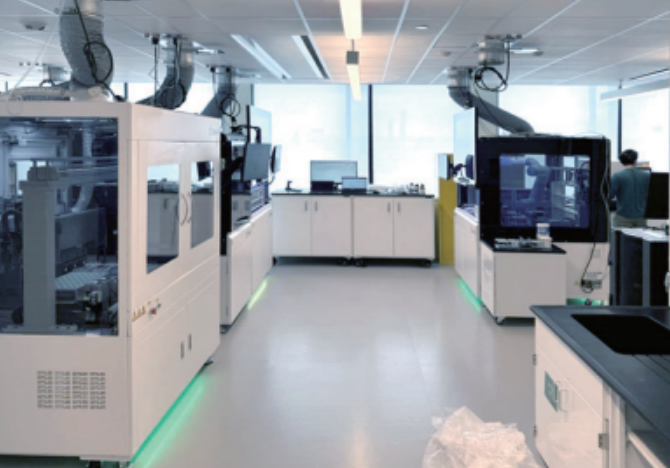
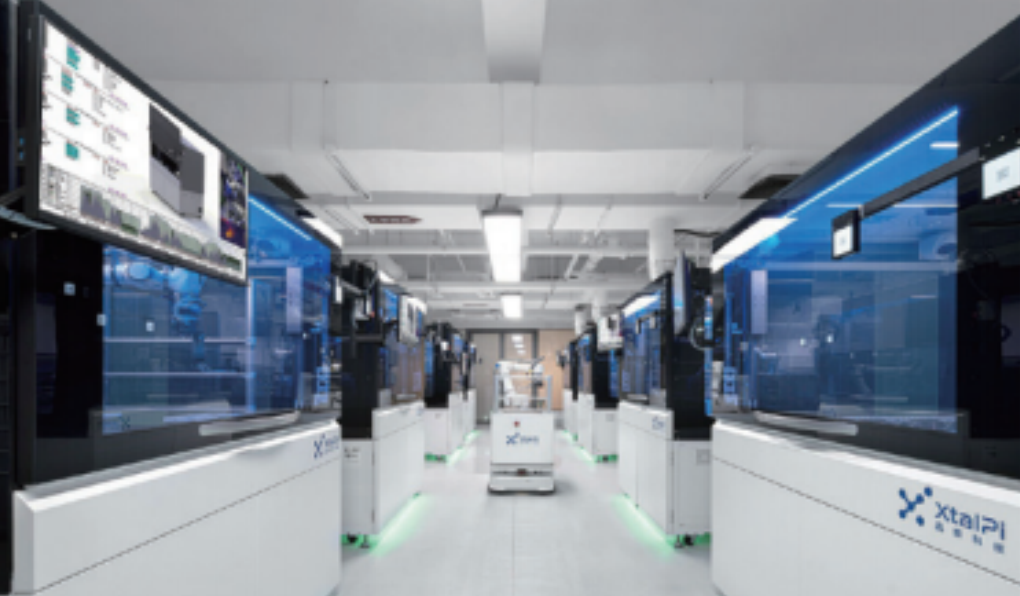
- Synthesis Hurdles: Automated chemical synthesis labs, powered by robotic workstations, can produce over 600 compounds per week, significantly accelerating the Design-Make-Test-Analyze (DMTA) cycle.
The infrastructure supporting these advances is massive. With over 10,000 square meters of laboratory space and a multi-cloud architecture providing million-peak CPU core scheduling, the platform ensures that the computing power matches the biological complexity.
The Role of Library Design and Virtual Screening
In the vast yet precise chemical space required for molecular glues, library design and virtual screening are critical. Because subtle structural differences are so impactful, a "smart" screening approach is needed to navigate broad chemical space and iteratively refine hits.
Virtual libraries allow for the exploration of structural and chiral diversity before a single molecule is synthesized. This process ensures that the synthesized compounds have high synthetic accessibility—often exceeding 90%—and are focused on the most promising chemical scaffolds. By filtering millions of candidates in silico, researchers can identify "molecular glue-naïve" opportunities in targets that lack canonical binding loops.
Case Study
A practical application of this platform involved a screen for a target known as POI-X, a high-value target that lacked a canonical G-loop. Through iterative library design, the process began with a diverse library of over 3,000 compounds, identifying initial hits with a DC50 of 34 uM. Through data-driven insights and focused library optimization, the second iteration narrowed the field to 100 compounds, resulting in a "best hit" with a significantly improved DC50 of 28 nM and a Dmax of 79%. This demonstrates the efficiency of an adaptive discovery model in moving from broad exploration to potent, clinically relevant leads.
A New Era of Therapeutics
The integration of agentic AI into the entire drug discovery process—from procurement and compound management to determining reaction conditions—marks a new era. By coupling "dry" (computational) and "wet" (experimental) laboratories, the path toward first-in-class therapeutics is shortened.
XtalPi always continues to invest heavily in its digital and hardware infrastructure. By offering end-to-end solutions for global pharmaceutical leaders, the platform is transforming the discovery of molecular glues from a matter of luck into a repeatable, rational science.
A robust molecular glue platform must be supported by an extensive biology platform and specialized R&D centers. XtalPi maintains operational bases in Shenzhen, Shanghai, Beijing, Boston, and Liverpool, with more than 70% of its workforce dedicated to R&D. These centers offer:
- Biology Platforms: Essential for validating degradation activity and ensuring drug-likeness.
- Polymorph Screening: Key results from such screenings ensure that the final drug candidate has the optimal crystalline form for stability, solubility, and manufacturing consistency—factors critical for clinical success.
For more information on the technological evolution of molecular glue discovery, visit: https://en.xtalpi.com/
Media Contact
XtalPi bd@xtalpi.com