Dover, Delaware Jun 9, 2026 (Issuewire.com) - In the highly regulated fields of pharmaceutical, bio-pharmaceuticals, medical devices, and clinical diagnostics, bacterial endotoxin testing (BET) remains a critical requirement for safeguarding patient safety and ensuring product quality. As the industry advances toward high-throughput screening and automated quantitative analysis, assay accuracy increasingly depends not only on sophisticated instrumentation, but also on the structural integrity, material consistency, and pyrogen-free quality of the consumables employed throughout the testing process.
Material contamination, surface irregularities, or manufacturing inconsistencies in testing vessels can adversely affect assay reproducibility, resulting in false-positive responses, signal deviation, or inaccurate endotoxin quantification. To mitigate these risks, laboratories require advanced microplate readers equipped with highly precise optical detection systems capable of delivering stable, reliable, and reproducible data acquisition.
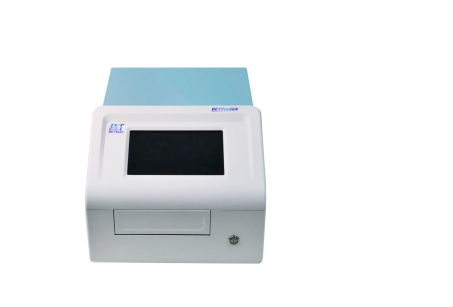
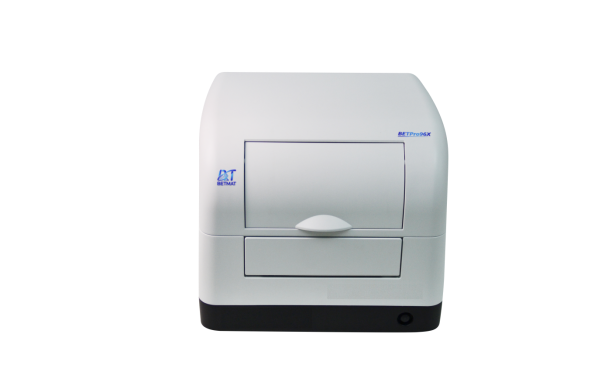
To address these demanding analytical requirements, BETMAT Biotechnology LLC has developed advanced kinetic incubating microplate readers together with professionally engineered pyrogen-free microplates designed for seamless integration with high-precision optical detection systems. This integrated endotoxin testing platform combines sensitive quantitative analysis capabilities with high-quality consumables to deliver exceptional assay consistency, minimized experimental variability, and enhanced data reliability. By optimizing both instrumentation performance and consumable compatibility, BETMAT provides laboratories with a robust and dependable solution for improving quantitative accuracy and strengthening quality control workflows in bacterial endotoxin testing applications.
The Evolution and Modern Challenges of Quantitative Endotoxin Testing
For decades, the detection of lipopolysaccharides (LPS) derived from Gram-negative bacteria relied predominantly on qualitative or semi-quantitative methodologies such as the gel-clot assay. Although effective, conventional manual gel-clot testing is labor-intensive and lacks the analytical sensitivity and throughput required for modern biopharmaceutical manufacturing and process monitoring. As a result, major global pharmacopeias increasingly recommend kinetic photometric methodologies, which provide accurate quantitative analysis, enhanced sensitivity, lower detection limits, and automated data acquisition and processing.
The widespread adoption of quantitative endotoxin testing has further emphasized the importance of high-quality laboratory consumables. Because kinetic assays monitor subtle optical changes throughout the reaction process, any exogenous endotoxin contamination or optical imperfection within a 96-well microplate can significantly compromise analytical accuracy. Conventional laboratory microplates may contain trace pyrogen contamination introduced during manufacturing, packaging, transportation, or handling, potentially leading to artificially accelerated reaction kinetics and false-positive or elevated endotoxin results in sensitive kinetic assays.
In addition, inconsistencies in polymer transparency, surface finish, or well-bottom uniformity may cause light scattering and optical interference, directly affecting baseline stability and signal detection in highly sensitive microplate readers. Therefore, maintaining a genuinely pyrogen-free and optically optimized testing environment is essential for ensuring assay precision, reproducibility, and regulatory compliance in quantitative bacterial endotoxin testing applications.
Overcoming Matrix Interference and Consumable Variability
Matrix interference remains a significant challenge in pharmaceutical quality control laboratories, particularly when testing complex sample matrices such as biologics, vaccines, and monoclonal antibody formulations. The chemical or physical characteristics of these samples may inhibit or enhance the endotoxin reaction, potentially affecting assay accuracy and reliability. Addressing such interference often requires optimized sample dilution strategies or specialized reagent formulations. However, when laboratory consumables contribute additional background variability, the identification and resolution of matrix interference become substantially more difficult.
BETMAT addresses this challenge by manufacturing its consumables under stringent cleanroom-controlled conditions, ensuring that each microplate is certified to contain endotoxin levels well below the detection thresholds of highly sensitive kinetic assays. By minimizing background pyrogen contamination and reducing consumable-related variability, laboratories can more effectively distinguish genuine sample-matrix effects from external analytical interference.
The reduction of extrinsic variables supports improved kinetic curve consistency and enhanced assay reproducibility, enabling analysts to evaluate complex pharmaceutical formulations with greater confidence while minimizing the need for excessive or non-standardized sample dilutions.
System Integration: Optimizing Microplates for Advanced Optical Readers
Achieving maximum precision in quantitative endotoxin assays requires a holistic approach where reagents, plates, and instrumentation function as a single integrated system. BETMAT’s pyrogen-free microplates are specifically engineered to match the mechanical and optical specifications of advanced detection platforms, including the specialized Endotoxin Reader systems utilized in modern laboratories.
Optical Clarity and Baseline Stability
Kinetic assays track changes in light transmission or absorbance at specific wavelengths, such as 405 nm for chromogenic tests or 340 nm for turbidimetric assessments. BETMAT’s microplates feature highly uniform well bottoms designed to minimize light scattering. This structural uniformity ensures a stable baseline reading across all 96 wells, allowing the software to detect the exact onset of gelation or color development without optical artifacts.
The microplates are meticulously calibrated to complement the optical path of high-precision detection instruments. By utilizing an optimized light source and interference filters, the accompanying reading systems deliver an impressive measurement range from 0 to 4.0 OD. This technical synergy guarantees exceptional linearity and minimizes baseline drift, allowing for the precise resolution of even minor changes in optical density.
Temperature Uniformity and Independent Incubation
Kinetic assays are highly temperature-dependent, requiring a constant environment of 37°C ± 1°C. In standard microplates, an "edge effect" can occur, where outer wells warm or cool at different rates than the center wells, causing uneven reaction kinetics.
When paired with a high-performance Kinetic Incubating Microplate Reader, BETMAT's plates promote uniform thermal distribution across the entire matrix. The instrumentation utilizes an advanced, independent heating design that ensures the incubation block maintains a tight temperature accuracy of ± 0.2°C. This eliminates positional bias and ensures that identical endotoxin concentrations yield identical reaction times, whether positioned in the center or along the periphery of the plate.
Broad Compatibility Across Detection Methodologies
Modern quality control workflows demand versatility. A single laboratory may run a Kinetic Turbidimetric Assay (KTA) for water systems, a Kinetic Chromogenic Assay (KCA) for colored biological samples, or next-generation Recombinant Cascade Reagent (rCR) tests to support sustainability initiatives.
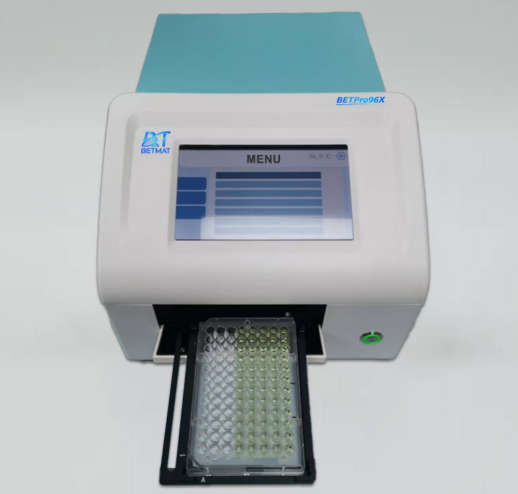
BETMAT’s consumables are fully compatible with these diverse methodologies. When utilized alongside a flexible platform like the BETPro96X system—which features a wide wavelength range of 340 nm to 1000 nm and supports multiple quantitative protocols—these microplates ensure that the integrity of the optical path is preserved regardless of the chosen assay chemistry. The instrument’s ability to perform rapid, continuous plate reading prevents data loss during critical kinetic onset points.
Enhancing Laboratory Throughput and Regulatory Compliance
In a high-volume manufacturing environment, operational efficiency is directly tied to the reliability of testing workflows. False positives caused by contaminated consumables necessitate time-consuming investigations, re-testing protocols, and production delays. By implementing certified pyrogen-free microplates, facilities can significantly reduce the incidence of artifact-driven out-of-specification (OOS) results.
This systematic reliability supports compliance with global data integrity standards, such as FDA 21 CFR Part 11 and EU Annex 11. The professional software workstation accompanying the hardware offers robust security features, including multi-level user access controls, comprehensive audit trails, and secure electronic signature workflows.
When automated readers interface with data analysis software to plot standard curves and interpolate unknown samples via linear regression, the accuracy of the final calculation depends entirely on the purity of the initial inputs. Providing a controlled, contaminant-free environment within each well allows the data analysis software to generate reliable standard curve linear correlation coefficients (where |r| is greater than or equal to 0.99) and maintain low assay coefficient of variation (CV) percentages.
Conclusion
As pharmaceutical and biotechnology sectors face tightening regulatory scrutiny and an increasing demand for faster batch release times, the optimization of every component within the analytical workflow becomes essential. The choice of microplate is no longer a trivial consideration but a critical factor influencing the precision, reproducibility, and compliance of quantitative bacterial endotoxin testing.
By focusing on stringent contamination control, optical uniformity, and seamless system integration with advanced instrumentation, BETMAT Biotechnology LLC provides the foundational tools necessary to achieve reproducible data in critical quality control environments. For detailed product specifications, application notes, and further information on optimizing quantitative testing workflows, please visit the official company website: https://www.betmatbio.com/.
Media Contact
BETMAT BIOTECHNOLOGY LLC sales@betmatbio.com https://www.betmatbio.com/