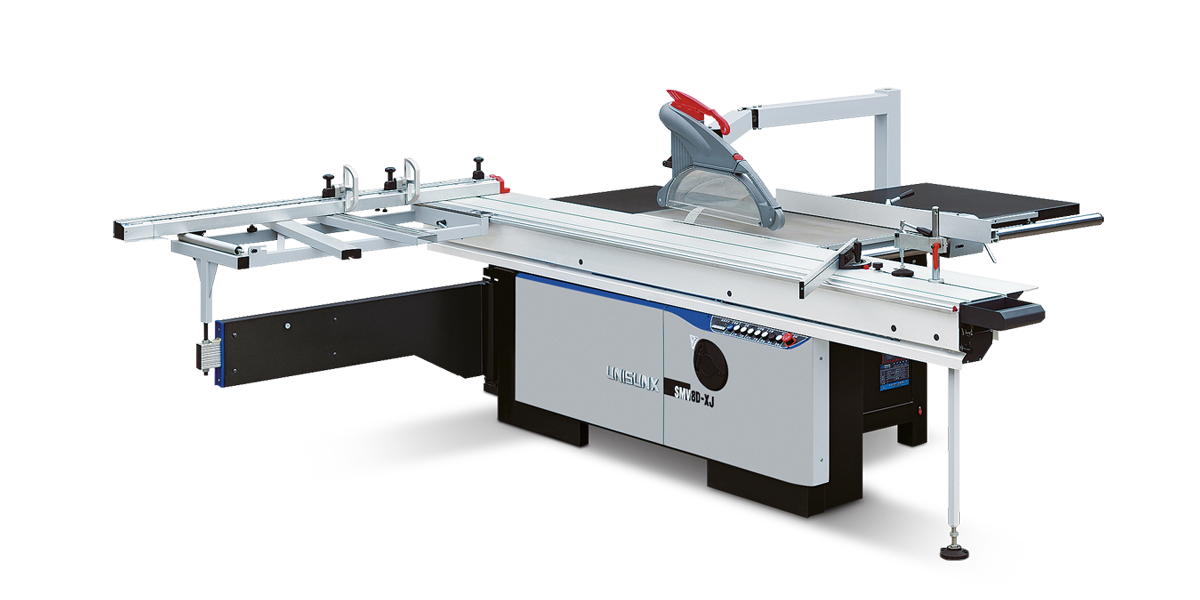

Qingdao, Shandong Mar 31, 2026 (Issuewire.com) - What defines the heartbeat of a modern furniture production line? Is it the precision of a digital design software, the speed of automated assembly, or perhaps the consistency of the very first cut? In an era where global furniture manufacturing is shifting rapidly toward high-precision, high-efficiency, and deep-customization, the humble panel saw has evolved from a basic shop tool into the cornerstone of industrial productivity. As the first step in the complex chain of wood processing, the stability and accuracy of the sawing process dictate the success rate of every subsequent operation. Today, when seeking the Best Industrial Panel Saw Factory in China, one finds that manufacturers are not merely building machinery; they are refining standardized industrial processes that serve as the foundation for factories worldwide. Among these, Qingdao Yongqiang Woodworking Machinery Co.,Ltd(UNISUNX) has emerged as a representative force, driving the industry toward more sophisticated manufacturing benchmarks.
The Manufacturing Philosophy: A Quality Closed-Loop
Achieving industrial-grade consistency is rarely the result of a single mechanical innovation; it is the product of a rigorous, closed-loop manufacturing philosophy. For a facility to be recognized as a leading industrial panel saw factory in China, it must exert granular control over every phase of production—from the sourcing of raw materials to the final assembly and calibration.
A central pillar of this approach is the commitment to total quality management. Before a machine leaves the factory floor, it must undergo a series of stringent assembly checks and pressurized load tests. This "quality-first" mentality ensures that the structural integrity of the machine—its ability to resist vibration and maintain alignment during heavy-duty operation—is not left to chance. By implementing these standardized checkpoints, the factory transforms individual hardware components into a reliable, integrated system designed for long-term endurance.
Engineering Excellence: The Technical Backbone
The distinction between a general-purpose saw and an industrial-grade machine lies in the details of its configuration. Modern demand necessitates a design that minimizes cutting deviation while maximizing operator safety.
- Precision Geometry: The integration of the European sliding table system represents a significant leap in cutting accuracy. By ensuring smooth, frictionless movement, this system effectively mitigates the deviations common in high-volume processing, ensuring that every panel cut is clean and dimensionally exact.
- Core Power and Longevity: The reliability of a saw is anchored by its motor configuration and cutting tools. Equipping machines with high-performance motors and utilizing industry-recognized saw blades, such as those from LEUCO, provides the torque and edge quality required for diverse material types, thereby extending the machine’s effective service life.
- Ergonomics and Safety: Modern manufacturing prioritizes the worker as much as the output. The implementation of Type A and E protection hoods serves as a critical safety standard, safeguarding operators without hindering workflow efficiency. This balance of safety and utility is a hallmark of sophisticated engineering, where production speed does not come at the expense of industrial safety protocols.
Product Spotlight: The UNISUNX Panel Saw Series
The UNISUNX panel saw range is engineered to address the multifaceted requirements of modern woodworking. From its foundational design, the series emphasizes robust construction, ensuring minimal vibration and consistent cutting performance across varied material densities, including particleboard, MDF, and solid wood. Key models incorporate features like a scoring saw blade for chip-free cutting on laminated panels, and digitally controlled angle adjustments for precise miter cuts. The attention to detail extends to user experience, with intuitive control panels and easy blade change mechanisms that contribute to both operational efficiency and operator satisfaction. This comprehensive approach ensures the panel saw acts not just as a tool, but as a performance enhancer for any furniture production line.
Digital Compatibility: Integrating into the Smart Factory
Beyond mechanical robust-ness, the contemporary industrial panel saw must act as an intelligent node within a broader digital manufacturing ecosystem. As factories transition toward Industry 4.0, the ability of a saw to integrate with optimization software and PC-based control systems has become paramount. Leading manufacturers now prioritize "connected intelligence," ensuring that their equipment can interpret complex cutting patterns generated by design software, thereby reducing material waste and human error. By providing hardware that serves as an open platform for digital integration, these machines assist furniture manufacturers in bridging the gap between traditional craftsmanship and modern automated production, allowing for seamless data flow from the design office to the machine operator.
Production Lifecycle Support: Agility in a Changing Market
The challenge for large-scale manufacturers is to maintain the speed of a standard assembly line while offering the flexibility required by modern, customized furniture orders. Achieving a production cycle of 45 to 55 days requires a highly agile supply chain and refined internal logistics. This responsiveness allows furniture factories to pivot between mass production and bespoke projects without facing long periods of equipment downtime.
Furthermore, manufacturing standards extend well beyond the factory floor. The true measure of a manufacturer’s commitment is the support system provided to its global clients. Comprehensive service architectures—ranging from on-site engineering support and overseas installation to remote technical diagnostics—are essential. By ensuring that a facility can maintain peak productivity regardless of its location, the manufacturer effectively treats support as a functional extension of the machinery itself.
Expert Authority: Beyond the Supplier Role
As the industry evolves, manufacturers are increasingly expected to act as knowledge centers. The leadership position of a company is often verified by its involvement in professional discourse, such as consultations with local home furnishing industry associations. This engagement allows for a reciprocal flow of information: manufacturers learn from the real-world challenges faced by furniture producers, and in turn, share insights on maintenance optimization and best practices for CNC and sawing operations. By positioning themselves as experts who offer deep technical guidance, these companies move past the traditional role of a "supplier" and become strategic contributors to the industry’s collective knowledge.
The Strategic Partner
In the current global economic climate, selecting an equipment partner is a strategic decision that affects long-term return on investment. Opting for a manufacturer that adheres to high industrial standards is, fundamentally, a risk-mitigation strategy. It is about choosing equipment that minimizes production variance, reduces waste, and ensures reliability through years of continuous operation. As industrial standards continue to climb, factories that leverage the expertise and consistency of leading Chinese manufacturing bases will be best positioned to thrive.
For more information, visit: www.unisunx.com
Media Contact
Qingdao Yongqiang Woodworking Machinery Co.,Ltd ericliu@qd-yongqiang.com http://www.unisunx.com