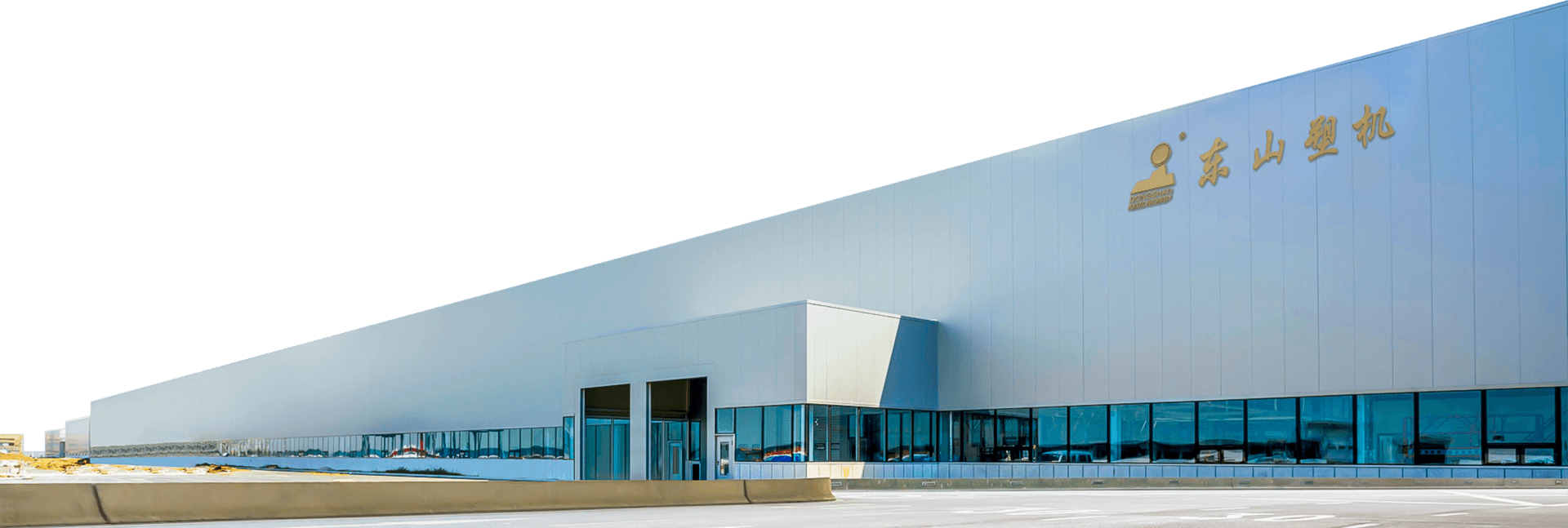
Hangzhou, Zhejiang Jan 12, 2026 (Issuewire.com) - This article explores new automation in China’s polystyrene block machinery. We focus on Hangzhou Fuyang Dongshan Plastic Machinery Co., Ltd. (Dongshan) and how their vacuum molding technology improves production.
Today, foam manufacturers need better efficiency and consistent quality. Dongshan meets these needs directly. With 20 years of experience, the company handles everything from R&D to sales and service. Their location in Hangzhou, near Shanghai and Ningbo ports, ensures fast global shipping.
Dongshan’s new automatic machines solve modern market challenges. They help factories manage different product sizes, speed up production cycles, and lower costs.
Industry Trends and Automation Requirements
In the broader foam-plastics industry, block-molding remains a foundational process. EPS foam blocks serve as raw material for insulation boards, architectural panels, packaging inserts, and more. As demand grows for higher throughput and tighter tolerances, manufacturers increasingly focus on automation, process stability and energy efficiency. Traditional production lines—with manual interventions, long cycles and variable output—are gradually being out-matched by systems offering faster cycle times, precise steam and vacuum control systems, reduced manual labour and flexible mold sizes.
The significance of automation in block-molding is also driven by rising labour costs, the drive to reduce energy consumption, and the need for consistent quality across large-scale production. Consequently, manufacturers deploying automatic vacuum block molding machines with sophisticated control systems is positioned to meet the evolving demands of global foam-block producers.
Company Profile and Manufacturing Capabilities
Dongshan brings a strong foundation that supports its role in advancing block-machine automation:
The company has focused for almost 20 years on EPS and EPP foam-plastics machines, integrating independent R&D, manufacturing, sales and service.
Its location in Hangzhou, close to major ports like Shanghai and Ningbo, provides strategic logistical support for exports and global service.
Since 2007, Dongshan’s machinery has achieved CE and ISO9001-2008 certifications, and the firm holds recognition as a high-tech enterprise plus more than 48 utility-model patents and 6 invention patents.
The product range includes block-molding machines, shape-molding machines, pre-expanders, cutting machines, recycling systems and auxiliary equipment.
Exporting to more than fifty countries, Dongshan has built a global service and marketing network.
The company emphasises “Brand based on quality, bright future based on service” as its guiding principle.
These elements combine to provide a compelling case for Dongshan’s capacity to support high-efficiency foam-block manufacturing operations.
Automatic vacuum block-molding machine: technology and features
Central to Dongshan’s automation breakthrough is its automatic vacuum block-molding machine. The company’s product descriptions and technical data highlight features that bolster efficiency, consistency and automation.
Structural and mold-design features
The machine includes heat-treated and stress-relieved mold frames and aluminium steam plates with Teflon coating, which ensure dimensional stability and reduce deformation under long-term use.
The mold panels are engineered for efficient steam distribution (with multiple steam lines), improved drainage systems for faster drying, and uniform block fusion for stronger end products.
A width-adjustable horizontal vacuum block-molding variant enables adaptable block sizes via touch-screen input, automatic platen adjustments and variable mold configurations—supporting production flexibility.
Core Advantages and Performance Leap
This fully automated foam molding machine represents a generational leap in efficiency, energy consumption, and quality.
- Full-Cycle Automation & Precision Control
Process Automation: Feeding, pre-expansion, steaming, vacuum forming, cooling, block ejection—all critical stages are precisely managed under PLC or high-end touch-screen control. This virtually eliminates cycle variability caused by manual intervention, leading to a 30%–50% reduction in labor requirements.
Integrated Vacuum Systems: The optimized, integrated vacuum system is key to performance, not just an auxiliary feature. It significantly reduces drying time and is responsible for a 12%–20% improvement in finished block density uniformity.
Stable Repeatability: Precisely regulated steam and compressed air systems ensure an extremely stable forming environment, dramatically boosting the repeatability and consistency of production.
- Quantified Efficiency and Cost Optimization
Maximum Mold Cavity: 4080 x 1240 x 1030 mm
- Sustainability and Material Flexibility
Recycling Material Blending: Select advanced models support recycling-material blending (e.g., integration of foam-scrap content), allowing customers to incorporate post-consumer or production waste into the mixture.
Benefit: This not only supports sustainable production goals but also enables more cost-effective operations through efficient waste utilization.
- International Standards and Quality Commitment
CE Certification :
Meaning: Product is compliant with all EU safety, health, and environmental regulations.
Scope: Covers mechanical safety, electrical control safety, pressure vessel safety, noise standards, and environmental requirements.
Value: Guarantees the equipment is safe, reliable, and compliant with international standards, allowing free entry into the EU market.
ISO 9001 Quality Management System:
Meaning: The company's R&D, manufacturing, inspection, and after-sales processes are all strictly managed according to globally recognized quality management standards.
Value for Buyers: Guarantees stable product quality, traceable production processes, and prompt after-sales support.
Long-Term Commitment: Dongshan has maintained both ISO and CE certifications since 2007, underlining the brand's commitment to long-term stability and strict adherence to quality.
the machine accommodates varying block densities and sizes, enabling manufacturers to shift between applications (insulation boards, packaging block blanks, custom block shapes) without large retooling cost.
The control system’s self-diagnosis, remote monitoring and adjustable mold parameters mean quicker changeovers, less downtime and enhanced market responsiveness.
Collectively, these features demonstrate how the machine supports a transition toward more efficient, automated, and flexible block-production operations.
Application scenarios: how block-machine automation delivers value
Manufacturers using the machine can observe practical benefits across several scenarios:
Insulation board and construction panel producers: These firms often require large foam blocks for subsequent cutting and panel production. The machine’s ability to produce large cavities, maintain uniform density and reduce drying time improves throughput and consistency—helping to meet the thermal-performance standards of modern building materials.
Packaging block producers: Custom block sizes for protective inserts or foam cores must be consistent in density and geometry. Automated block-molding machines reduce manual adjustments, maintain output uniformity and improve overall yield.
Custom foam-product manufacturers: As foam usage expands into new applications—such as architectural elements, sports equipment or automotive inner-linings—manufacturers benefit from machines that can adapt mold size, block density and cycle parameters quickly. The width-adjustable block-machine variant supports this flexibility.
Global and export-oriented foam operations: For producers shipping worldwide, equipment must meet international standards, operate reliably in diverse conditions and support quick service. A factory exporting machines globally stands to reduce risks associated with service interruptions or spare-parts availability.
Through these applications, the automation features of modern block-molding machines translate into real operational improvements: reduced downtime, higher throughput, consistent product quality, lower energy consumption and improved responsiveness.
Strategic considerations for manufacturing operations
When evaluating investment in block-molding machinery, manufacturing operations should consider the following strategic factors:
Cycle time and throughput: How quickly can a machine complete a molding cycle, including mold fill, steam/heat cycle, vacuum forming, cooling and ejection? Shorter cycle times translate into higher output capacity.
mold-size flexibility and changeover speed: The ability to handle different block sizes, switch between molds with minimal downtime and support adjustable formats improves line utilization and reduces idle time.
Automation and control systems: The presence of PLCs, remote monitoring, self-diagnostics, automatic adjustment (e.g., width or height adjustment) and operator-friendly interfaces impacts both operating cost and ease of use.
Energy and operational efficiency: Machines designed for multiple steam lines, efficient vacuum cooling, rapid drying and material-reuse capability reduce both variable cost and environmental footprint.
Quality consistency and repeatability: Features such as heat-treated mold frames, precision alignment systems and stable control of steam/vacuum ensure block density, dimensional accuracy and product quality remain consistent over time.
Export readiness and service infrastructure: For manufacturers operating internationally or supplying global markets, the machine supplier’s export credentials, certifications and service network matter significantly.
These considerations position equipment not simply as a cost item, but as a strategic asset influencing production agility, cost base, quality outcomes and competitive positioning.
Outlook: why now is opportune for automation in block-molding
The foam-block-molding sector is at a juncture where manufacturers face multiple converging pressures: rising demand for alternative construction materials, increased use of EPS in packaging, growing labour and energy costs, and evolving sustainability requirements. In response, automation of block- molding operations emerges as a key enabler of scalability and cost-control.
By deploying advanced block-molding machines—like those offered by Dongshan—manufacturers can better align production with these trends: adapting quickly to different product requirements, minimizing manual intervention, achieving tighter product specification controls and managing operational costs more effectively. As foam-block applications continue to expand into new sectors, the ability to deliver consistent, high-volume production becomes a competitive advantage.
In summary, Dongshan’s automation breakthrough in vacuum block-molding machines reflects the evolving needs of foam-block production—speed, precision, flexibility and cost-effectiveness. For manufacturers considering upgrades or expansions in foam-block capability, the choice of a factory with nearly two decades of machinery-experience, export infrastructure and varied product portfolio provides meaningful assurance. For more information on their machine models, technical specifications and service network, please visit https://www.dongshaneps.com/.
Media Contact
Hangzhou Fuyang Dongshan Plastic Machinery Co., Ltd. xu@dong-shan.cn https://www.dongshaneps.com/




