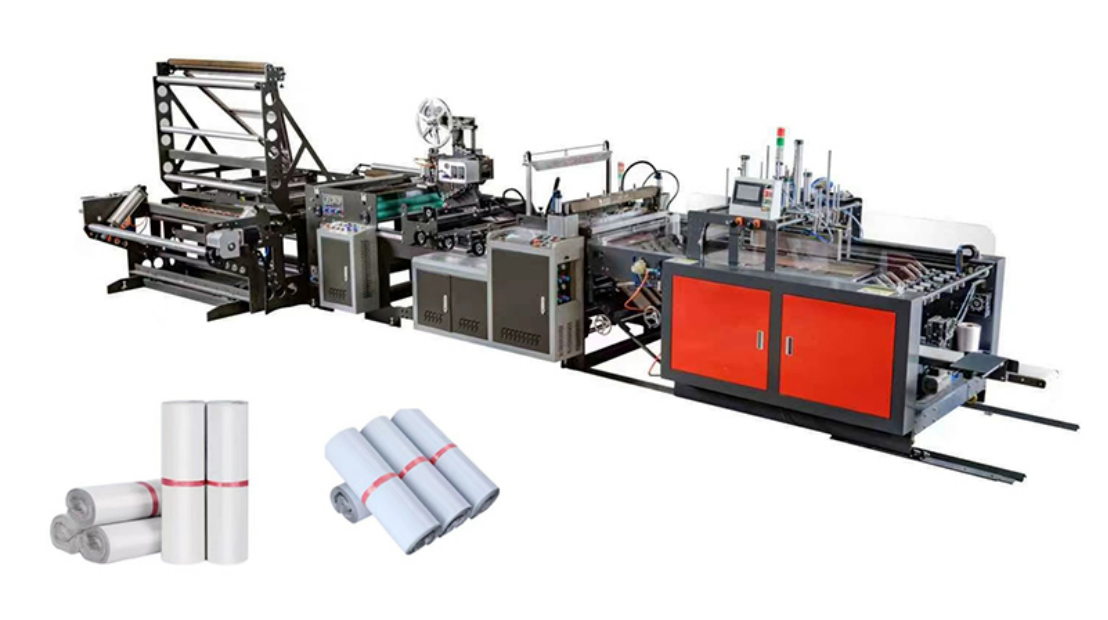
Jiangyin, Jiangsu Sep 8, 2026 (Issuewire.com) - As global e-commerce volume continues its exponential growth, fulfillment networks and packaging manufacturers face unprecedented pressure to increase daily dispatch capacity while maintaining strict quality standards. In modern courier logistics, the choice between traditional manual packaging assembly and automated machinery directly dictates operational throughput, overhead costs, and delivery precision. The transition toward automated production lines has become a fundamental benchmark for competitive fulfillment providers. Serving as a central component in this operational shift is the specialized courier bag making equipment engineered to convert plastic film or paper substrates into durable, tamper-evident express mailers. Designed for seamless industrial integration, the Top Rated Courier Bag Making Machine from China manufactured by Hangjia Machinery represents a major step forward in high-speed, automated express packaging fabrication.
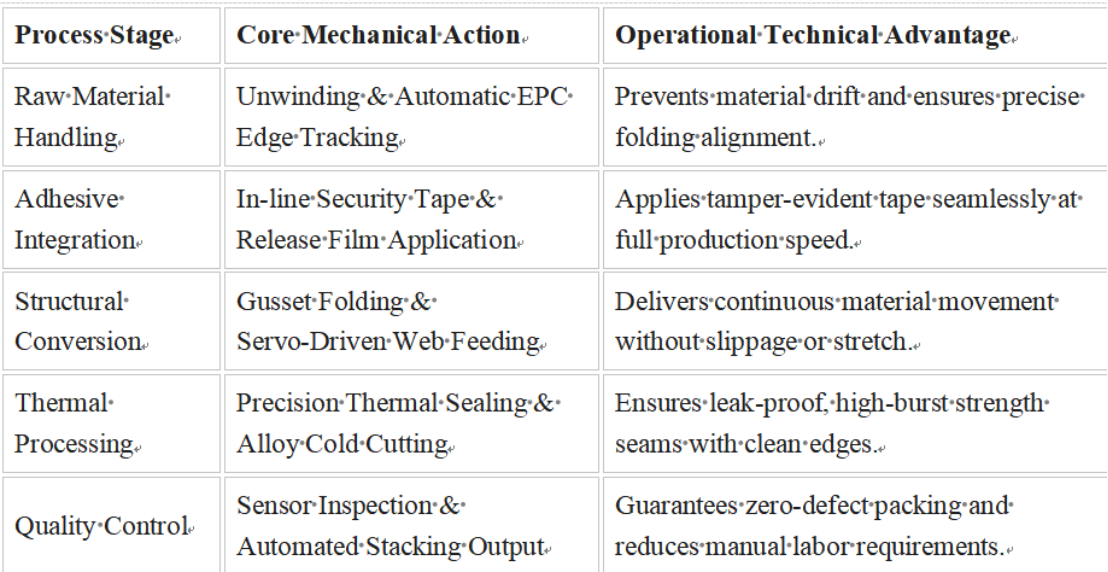
These machines integrate unwinding, edge alignment, heating seal bars, double-sided release tape application, and precision cutting into a single continuous process, replacing labor-intensive manual methods with stable, standardized production.
Global Logistics Evolution vs. Traditional Manufacturing Constraints
The global logistics landscape is undergoing a structural transformation driven by cross-border e-commerce expansion, shortened delivery cycles, and rising consumer expectations for secure, sustainable packaging. Modern fulfillment hubs process millions of parcels daily, requiring packaging suppliers to deliver express mailers in massive quantities with zero defect rates. Traditional manual or semi-manual bag production methods, which rely heavily on individual operator skill for sealing, gluing, and trimming, struggle to keep pace with these volume spikes. Manual workflows are inherently vulnerable to human fatigue, inconsistent thermal seal strength, high material waste during setup, and unpredictable labor availability.
To address these systemic bottlenecks, packaging manufacturers are increasingly adopting fully integrated, automated converting systems. Industry forecasts indicate that automated flexible packaging machinery will continue to capture market share over manual configurations as labor costs rise and logistics standards tighten globally. Modern packaging trends also demand greater material versatility, requiring machinery capable of handling recyclable poly films, co-extruded PE, PO material blends, and eco-friendly paper alternatives without sacrificing machine speed or thermal seal integrity. Automated express bag production lines bridge the gap between high-volume demand and operational precision, offering a scalable blueprint for modern logistics packaging suppliers.
Production Speed vs. Manual Labor Bottlenecks
In high-speed courier bag production, output volume per hour is the primary metric evaluating line efficiency. Manual assembly processes involve multiple discrete steps—including material cutting, manual adhesive tape application, folded edge pressing, and individual heat sealing. Even under optimal working conditions, a manual or semi-automated setup yields limited unit output per operator hour, making rapid scaling during peak shopping seasons virtually impossible without linear increases in labor headcount.
In contrast, automated express bag-making lines operate continuously at high linear speeds, producing hundreds of finished courier bags per minute. Servo-motor-driven web feeding systems ensure precise material advancement without slippage or mechanical delay. By automating the entire conversion process—from raw film roll loading and gusset folding to inline hot-melt adhesive tracking and thermal cutting—automated machinery eliminates production pauses and human handling errors. This drastic increase in production velocity enables packaging manufacturers to fulfill large-volume enterprise orders within strict deadlines while operating with a lean workforce.
Sealing Consistency vs. Variable Thermal Quality
Packaging integrity during transport is critical for express logistics. Courier bags must withstand rigorous sorting machinery, environmental temperature shifts, and rough handling without bursting or tearing at the seams. Manual heat-sealing methods depend on operator judgment for dwell time, clamping pressure, and sealing bar temperature. This variance frequently results in weak thermal seals, over-melted structural weak spots, or unsealed micro-gaps that compromise the tamper-evident security of the bag.
Automated courier bag machinery eliminates thermal inconsistency through digital temperature management and automated pressure controls. Precision heating bars equipped with independent microprocessor temperature controllers maintain constant heat across the entire sealing surface, regardless of line speed fluctuations. Integrated cooling systems immediately set the seal, ensuring maximum tensile strength before the bag reaches the collection stacker. The resulting thermal bond exhibits high burst resistance and permanent adhesion, ensuring that any attempt to open the express mailer results in visible material destruction—a key requirement for security-focused courier operations.
Material Efficiency vs. Operational Waste Accumulation
Material cost represents a major portion of ongoing expenditure in express packaging manufacturing. Manual cutting and folding techniques inevitably produce a higher rate of trim scrap, misaligned edge folds, and discarded units caused by improper sealing timing. Over time, cumulative material waste significantly erodes profit margins, particularly when processing premium multi-layer co-extruded films or specialized eco-friendly substrates.
Automated machines optimize material usage through advanced photoelectric eye tracking and automatic web-guiding correction systems. These sensor-driven mechanisms continuously monitor film alignment, instantly correcting lateral drift before material enters the sealing and cutting zones. Precise servo control guarantees uniform bag dimensions, accurate perforation placement, and minimal edge trim waste. By standardizing every phase of material conversion, automated lines consistently maintain higher yield rates per roll of raw film compared to manual manufacturing setups.
Long-Term Capital Investment vs. Recurring Labor Overhead
Evaluating packaging equipment requires analyzing both initial capital expenditure and ongoing operational costs. While manual and low-tech setups carry lower upfront purchasing costs, their long-term operational expense is heavily inflated by recurring labor wages, shift management overhead, turnover training costs, and product rework expenses caused by human error. As global labor rates continue to rise, relying on manual bag conversion becomes economically unsustainable for growing packaging enterprises.
Investing in high-speed automated machinery shifts the financial structure from variable operational labor expenses to predictable capital assets. A single automated courier bag line can match the output of extensive manual team setups while requiring minimal supervisory staff. The reduced labor overhead, combined with lower material scrap rates and higher daily production capacity, delivers a fast return on investment. Over a multi-year operating lifecycle, automated equipment provides predictable unit costs and protects manufacturers from regional labor shortages.
Engineering Excellence: Core Advantages of HJ Machinery Equipment
The technical capabilities of HJ Machinery’s express bag production equipment stem from extensive research and specialized manufacturing experience in e-commerce packaging machinery. Built on heavy-duty, vibration-absorbent steel frames, these bag-making lines are engineered for continuous 24/7 industrial operation under demanding high-speed conditions. The mechanical architecture incorporates high-precision pneumatic components, heavy-duty drive shafts, and centralized lubrication systems to minimize mechanical wear during extended production runs.
At the core of the machine’s design is a fully integrated control ecosystem managed via an intuitive PLC touch screen interface. Operators can precisely calibrate line parameters—such as bag length, sealing bar temperature, conveyor speed, and print registration—with digital accuracy. The machinery features versatile modular tooling options that allow seamless switching between different express mailer designs, including standard poly mailers, double-seal return bags, bottom-gusseted bags, and custom e-commerce mailers equipped with tear-tape opening strips.
A key technical highlight is the integration of custom inline double-sided tape applicators and automatic perforation units. The machine applies self-adhesive security tape and release liners directly onto the moving web at high speed without compromising line velocity. The sealing knife assembly utilizes specialized durable alloy metals treated to resist thermal deformation and carbon buildup, ensuring clean, sharp cuts and smooth edges across thin PE films, thick multi-layer materials, and laminated paper substrates alike.
Future-Ready Packaging Capabilities for High-Speed Supply Chains
As global logistics networks move toward smarter, faster, and more sustainable operations, packaging machinery must adapt to evolving market demands. Equipment designed with flexibility in mind enables manufacturers to smoothly transition between traditional plastic mailers and eco-friendly paper alternatives, such as honeycomb padded mailers and embossed paper bubble bags. By combining high-speed mechanical performance, intelligent digital control, and material versatility, automated bag-making machinery empowers packaging enterprises to meet rigorous modern logistics standards, optimize operating margins, and secure a lasting position in the global supply chain.
For detailed product specifications and enterprise packaging solutions, visit the official website at https://www.hangjiamachinery.com/.
Media Contact
Jiangyin Hangjia Machinery Co., Ltd. info@hangjiamachinery.com