Shenzhen, Guangdong Jul 25, 2026 (Issuewire.com) - Cross-border e-commerce merchants on Amazon face complex operational challenges when replenishing inventory across international borders. Successfully moving cargo from factory floors in China to active fulfillment centers requires precise synchronization of transport schedules, origin documentation, packaging compliance, and final delivery scheduling. When Amazon FBA Freight Forwarding is executed with rigorous discipline, sellers gain consistent visibility over their supply chain, eliminating bottlenecks and preventing stockouts during critical sales cycles. Rather than treating shipment planning as disconnected handoffs between local carriers and customs agents, modern export logistics demands an integrated coordination model aligning every phase of the cross-border journey.
Shenzhen Transworld Supply Chain Co., LTD, established in 2016 and operating under the brand shorthand TRANSWORLD, coordinates structured logistics solutions tailored specifically for international Amazon merchants. By bridging primary manufacturing origins with North American and global fulfillment networks, the company ensures export cargo adheres strictly to marketplace receiving standards before departure, transforming inventory replenishment into a predictable, manageable workflow.
Amazon FBA Freight Forwarding Begins with Inventory-Ready Planning
Effective Amazon FBA freight forwarding starts long before goods are loaded onto vessels or aircraft; it begins with comprehensive inventory-ready planning at origin. Experienced cross-border merchants evaluate multiple variables simultaneously, balancing warehouse stock levels, manufacturing lead times, cargo nature, and fulfillment deadlines to determine the optimal replenishment strategy. Upfront analysis allows sellers to categorize shipments based on volume and urgency, identifying whether specific consignments require standard consolidation or expedited transport channels.
In addition to schedule alignment, proactive origin planning requires thorough cargo screening and regulatory verification. Consignments containing specialized items, such as lithium batteries or liquid products, demand detailed material safety data sheets, specific packaging declarations, and verification of handling protocols. Conducting technical evaluations before cargo leaves the factory floor prevents unexpected delays and compliance holds at departure ports. By establishing clear procurement standards at the inception of each order, merchants ensure shipments move seamlessly into export channels without administrative friction.
TRANSWORLD Coordinates Export Logistics across China
To support cross-border merchants with diverse manufacturing relationships, TRANSWORLD maintains an extensive operational footprint connecting primary production zones across China directly to global fulfillment channels. Founded in 2016, the company coordinates export logistics across major coastal gateways, including Shenzhen, Dalian, Ningbo, Shanghai, Qingdao, and Guangzhou. These primary maritime and aviation hubs serve as consolidated departure points for international export shipments, providing merchants with reliable access to global carrier networks.
In addition to coastal infrastructure, TRANSWORLD integrates inland logistics nodes in Wuhan, Chongqing, and Changsha into its coordination framework. This inland capability allows merchants sourcing from interior manufacturing facilities to benefit from unified origin pickup, regional warehousing, and feeder transport orchestration. By managing origin logistics across both coastal gateways and inland nodes within a single workflow, the company eliminates fragmented communication and reduces transit uncertainty for Amazon sellers, maintaining centralized operational oversight from factory dispatch through port loading.
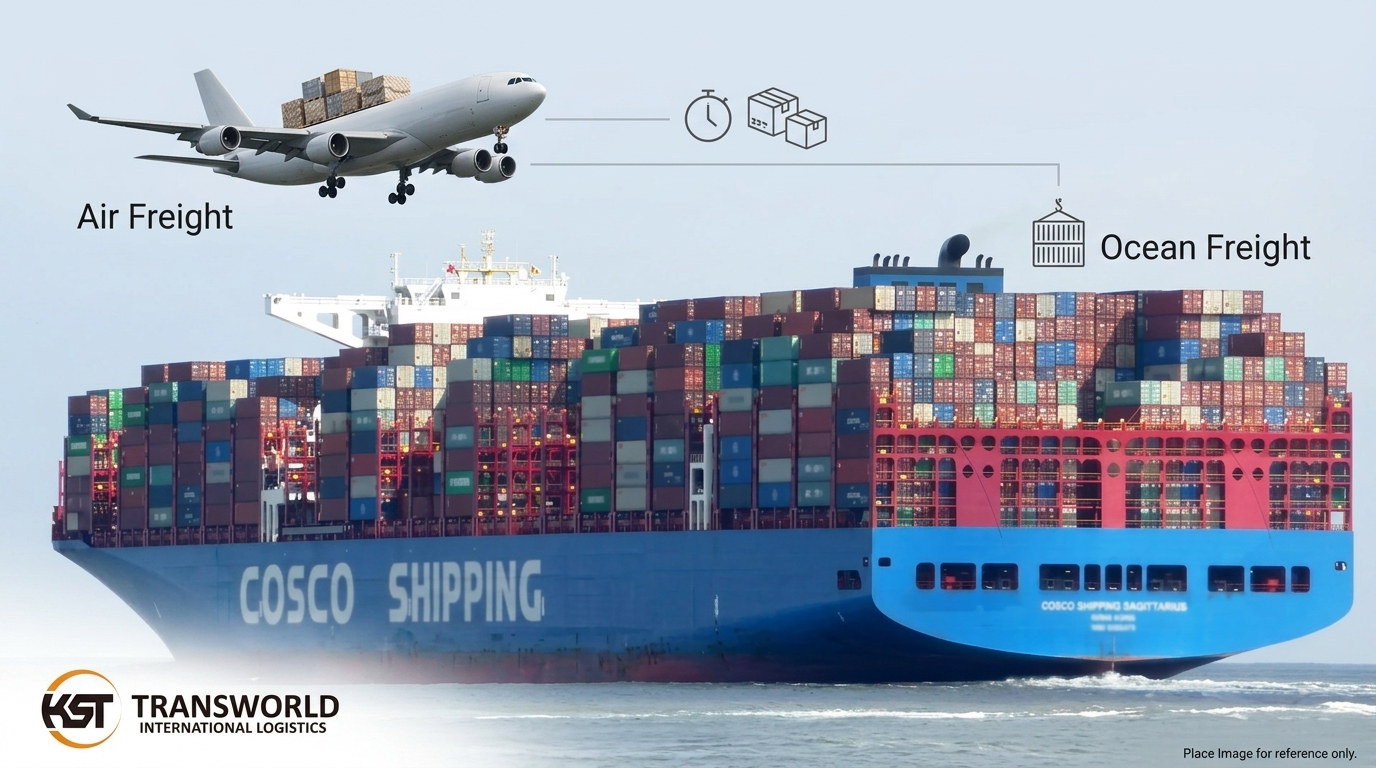
Air and Ocean Freight Match Different Seller Replenishment Cycles
Selecting the appropriate international transport mode requires aligning freight capabilities with specific seller replenishment schedules and inventory turnover dynamics. Air freight and express options provide accelerated transit timelines, serving as essential channels for urgent stock replenishment, initial product launches, or mitigating unexpected demand spikes. When marketplace inventory approaches critical low-stock thresholds, expedited aviation routes ensure rapid delivery to prevent ranking drops and missed sales opportunities.
For regular stock replenishment and high-volume cargo, ocean freight provides a cost-effective solution. When planning ocean transit for North American Amazon fulfillment centers, port-to-port planning baselines generally range from 20 to 30 days for East Coast shipping and 18 to 20 days for West Coast shipping. These indicative ranges represent maritime transit baselines and exclude required origin processing, destination customs clearance, and final inland drayage. By combining air and ocean schedules within an integrated Amazon inventory replenishment logistics strategy, sellers balance freight expenditure against stock availability.
FBA Preparation and Special-Cargo Screening Reduce Avoidable Handoffs
A frequent source of transit delays and receiving rejections in cross-border e-commerce involves discrepancies during fulfillment center check-in. Amazon fulfillment facilities enforce rigorous receiving specifications governing barcode accuracy, carton durability, pallet stack limits, and label placement. Performing comprehensive FBA preparation at origin facilities in China prior to international departure guarantees that every carton conforms precisely to destination marketplace guidelines. Systematic verification of FNSKU labels, outer carton markings, and structural packaging integrity ensures that shipments enter fulfillment center automation without relabeling surcharges.
Furthermore, specialized cargo screening at origin safeguards cross-border shipments from regulatory complications during transit. Products subject to hazardous material classifications or restricted transport regulations such as battery-powered electronics or liquid formulations undergo rigorous verification of packaging certifications and transport documentation. Ensuring that compliance criteria and handling requirements are satisfied prior to export departure eliminates secondary repacking at transit hubs and prevents avoidable handoffs between contractors, protecting brand reputation and predictable replenishment schedules.
Customs, Tracking, and Delivery Coordination Complete the Route
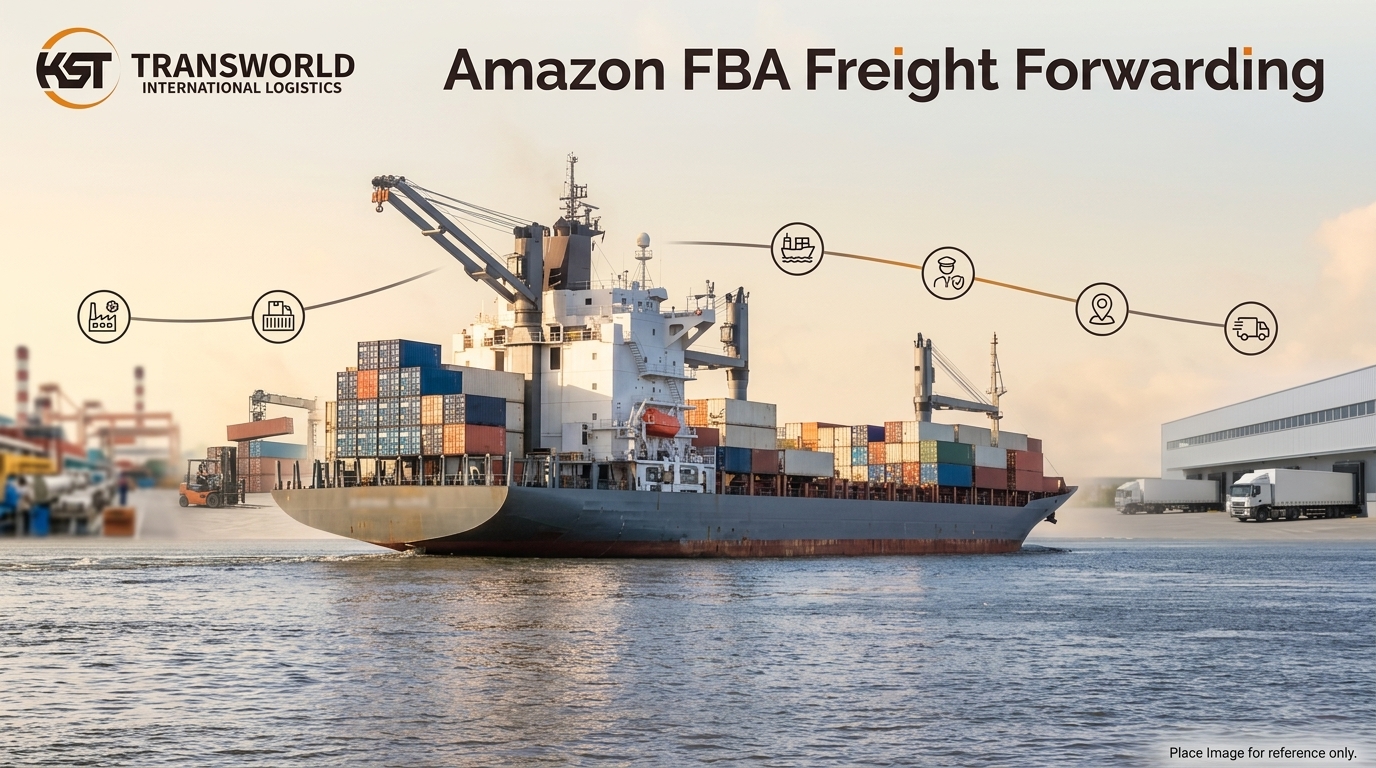
Executing successful Delivered Duty Paid (DDP) shipping from China requires comprehensive coordination that extends beyond international port arrival right to the assigned Amazon fulfillment center loading dock. End-to-end transport orchestration integrates origin customs clearance, international main-leg shipping via road, air, or sea, and formal import entry in the destination country. Managing all regulatory filings and customs declarations within a unified structure ensures cargo transitions across international borders with complete compliance and minimal administrative friction.
Throughout the international journey, continuous milestone tracking provides sellers with transparent visibility over their cargo. Real-time location monitoring and status updates allow merchants to track shipment progression from port departure through customs clearance and regional terminal arrival. Once shipments successfully clear destination border authorities, dedicated logistics coordinators manage final-mile delivery appointments directly with Amazon fulfillment centers, synchronizing local trucking schedules to complete the door-to-door transit chain cleanly.
Clear Shipment Inputs Support More Reliable Seller Decisions
Reliable cross-border logistics execution depends fundamentally on accurate, detailed shipment inputs at the initiation of the booking process. To receive precise freight quotations and realistic transit evaluations, cross-border sellers must organize essential consignment specifications, including total gross weight, exact carton dimensions, detailed commodity descriptions, origin facility locations, and target Amazon fulfillment center codes. Providing standardized, high-quality data upfront enables logistics planners to conduct accurate route comparisons, evaluate equipment compatibility, and determine the most cost-effective transport configuration for each consignment.
Establishing clear communication and verified shipment criteria early in the planning process provides sellers with the accuracy required to optimize freight expenditure, safeguard fulfillment timelines, and maintain steady cross-border business growth across international marketplaces.
Whether sourcing merchandise from coastal manufacturing centers in Shenzhen and Shanghai or interior hubs in Wuhan and Chongqing, cross-border sellers require a reliable logistics partner to navigate international supply chain complexity. By unifying origin preparation, transport mode matching, customs clearance coordination, and milestone tracking visibility, TRANSWORLD provides sellers with the operational support needed to sustain continuous marketplace replenishment. To explore customized export logistics solutions and submit shipment parameters for comprehensive evaluation, connect directly through the official web portal at https://www.transworldcn.com/ to coordinate reliable door-to-door Amazon FBA freight forwarding.
Media Contact
Shenzhen Transworld Supply Chain Co., LTD. jack@transworldcn.com +08618664988865 https://www.transworldcn.com/