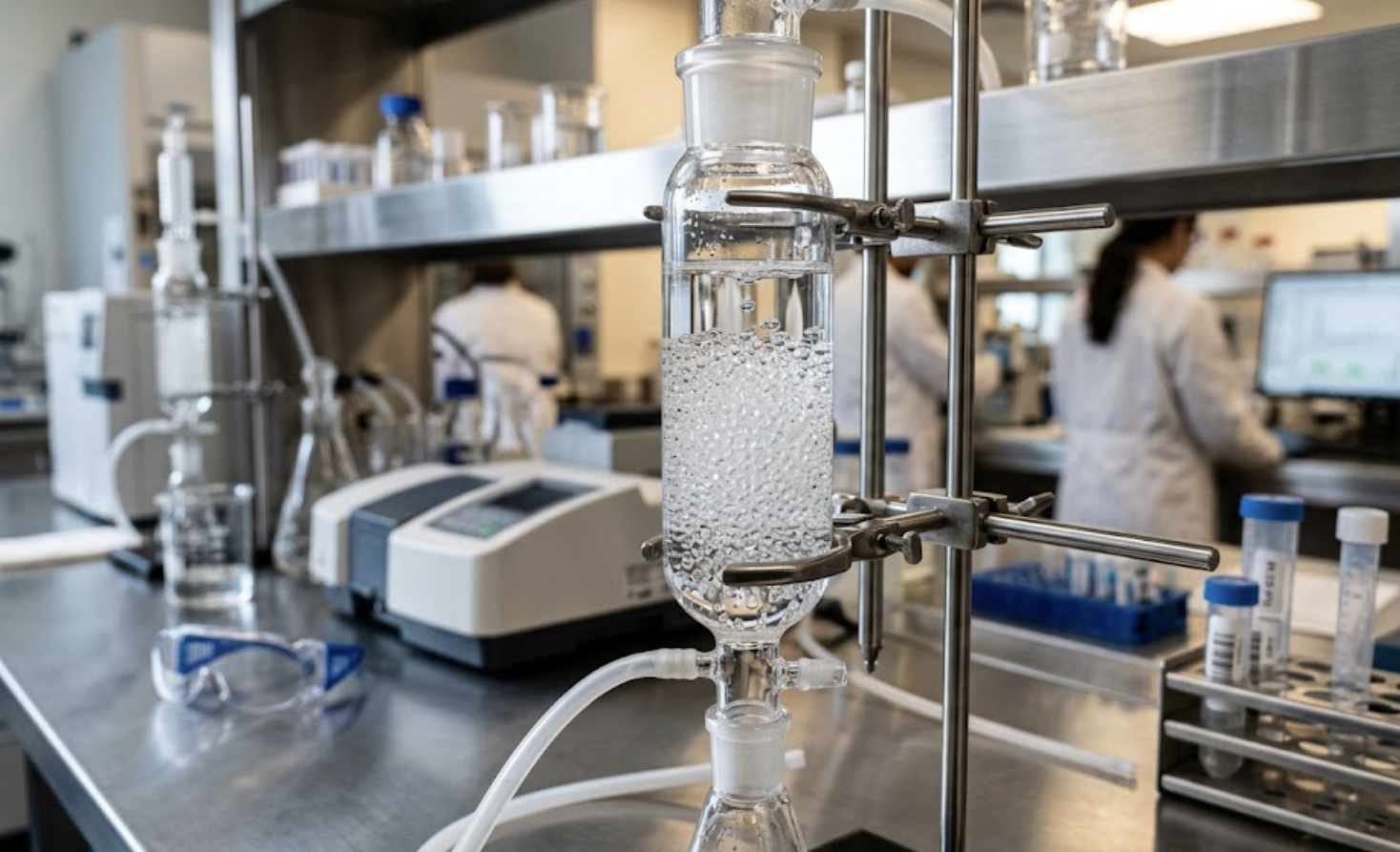
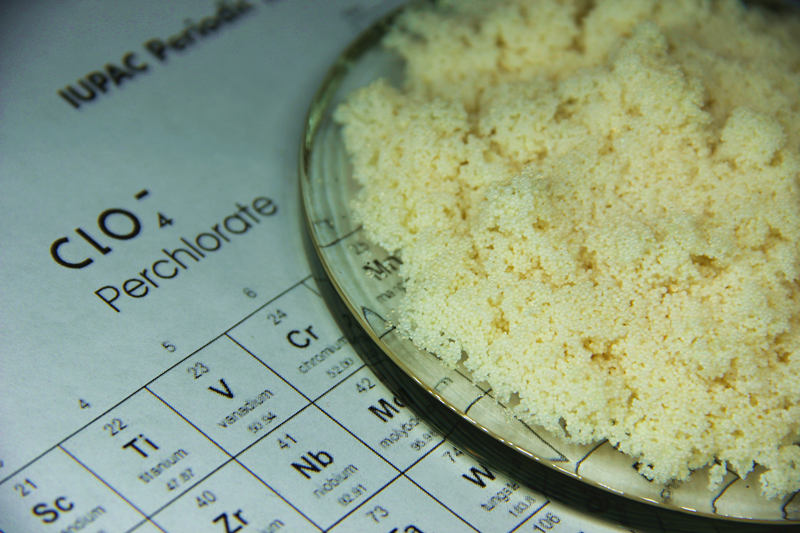
Xian, Shaanxi Sep 28, 2026 (Issuewire.com) - Ensuring safe drinking water requires strict adherence to global health standards as regulatory authorities intensify their focus on per- and polyfluoroalkyl substances (PFAS). Municipal water systems face growing pressure to deploy treatment technologies that eliminate toxic fluorinated chemicals without introducing harmful secondary byproducts into finished water. Evaluating material safety requires a thorough understanding of material science, toxicological limits, and third-party verification frameworks. Partnering with a recognized Advanced NSF Certified PFAS Resin Solutions Provider (https://www.seplite.com/pfas-removal/) allows water utilities to implement media that satisfies rigorous public health criteria while achieving non-detect contaminant levels. Engineering potable water solutions requires media manufacturers to validate material purity, mechanical durability, and long-term chemical stability. This technical overview explores the certification standards, polymer engineering principles, and quality control systems that safeguard municipal drinking water supplies. Deciphering NSF/ANSI/CAN 61: The Benchmark for Drinking Water Material Safety Public health mandates require every component in a potable water treatment system to undergo rigorous toxicological screening before commercial deployment. The NSF/ANSI/CAN 61 standard serves as the universal benchmark for evaluating health effects associated with drinking water system components. Independent testing laboratories execute comprehensive chemical extraction protocols to determine whether synthetic media releases unreacted monomers, residual polymer catalysts, heavy metals, or volatile organic compounds into water. Recent regulatory updates incorporate NSF 600 health effects criteria, which lower allowable leaching limits for single contaminants to single-digit parts-per-billion or parts-per-trillion levels. Consequently, certification verifies that ion exchange media maintains extreme material purity under aggressive water quality conditions. In addition to toxicological safety, certification standards evaluate structural stability under continuous hydraulic flow. Weak polymer matrices can degrade over time under dynamic operating pressures, generating microscopic resin fines that travel downstream. Fine generation compromises downstream filtration assets and creates operational head-loss problems within municipal filter vessels. Certified media undergoes rigorous physical testing to verify that polymer beads resist osmotic shock and mechanical shear force. Therefore, utilities using certified materials protect their hydraulic infrastructure while ensuring that treated water remains completely free of secondary particulate contamination. Certified Resin Engineering: Molecular Design of SEPLITE® LSI106G Translating certification standards into field performance requires sophisticated polymer synthesis and targeted functional group engineering. Advanced anion exchange media like SEPLITE® LSI106G (https://www.seplite.com/strong-base-anion-exchange-resin-lsi106g/) feature specialized macroporous polystyrene matrices grafted with complex quaternary ammonium groups, such as tributylamine functionalities. This tailored chemical design creates a dual-action removal mechanism combining strong electrostatic ionic attraction with hydrophobic interactions. As a result, the media captures both hydrophobic long-chain compounds like PFOA and PFOS as well as hydrophilic short-chain variants such as PFBA and PFBS. The specialized functional group arrangement prevents short-chain displacement, ensuring consistent compliance with strict non-detect target limits. High operating capacity under rapid linear flow conditions distinguishes engineered resins from conventional adsorption media. Specialized strong base anion resins maintain targeted selectivity even when processing raw water containing high concentrations of competing background anions, such as sulfates, nitrates, and chlorides. Operating efficiently at high linear velocities between 20 and 40 bed volumes per hour allows treatment plants to downsize filtration vessels substantially. Furthermore, short Empty Bed Contact Times (EBCT) between 1.5 and 3 minutes enable facility designers to optimize capital footprint requirements. This combination of high capacity and chemical selectivity provides municipal water authorities with reliable long-term operational stability. From Polymerization to Delivery: Factory Quality Control and Batch Traceability Achieving consistent field performance across large-scale municipal installations depends directly on manufacturing precision and factory quality control. Global separation technology leader Sunresin (Sunresin New Materials Co. Ltd.) (https://www.seplite.com/sunresin-profile/) operates advanced automated synthesis facilities certified under ISO 9001 and ISO 14001 quality and environmental management systems. Computer-controlled polymerization reactors strictly regulate temperature, agitation speeds, and crosslinking density during bead formation. This automated precision ensures a high whole-bead count of 93 percent or higher, while maintaining tight particle size distribution limits between 0.35 mm and 1.25 mm across more than 95 percent of produced batches. Rigorous quality assurance protocols extend across the entire manufacturing lifecycle, from raw material inspection to final product packaging. Batch-to-batch consistency plays a crucial role in preventing unexpected pressure drops and maintaining uniform flow distribution within industrial filter vessels. With an annual resin manufacturing capacity exceeding 50,000 cubic meters, Sunresin maintains full supply chain traceability for every production lot. Each certified resin batch undergoes extensive laboratory testing to verify operating capacity, moisture retention, and mechanical bead strength. Consequently, engineering firms receive fully documented media shipments that align with international potable water compliance standards. End-to-End Compliance Execution: Integrating Certified Media into Full-Scale EPC Systems Integrating certified ion exchange media into full-scale treatment infrastructure requires seamless alignment between material science and mechanical engineering. Designing custom filtration systems requires precise calculation of hydraulic parameters, vessel geometry, and internal distribution manifolds. Integrated Engineering, Procurement, and Construction (EPC) services bridge the gap between media certification and site-specific operational requirements. Engineering teams design specialized skid-mounted filtration units, automated control systems, and corrosion-resistant pressure vessels tailored to match specific raw water characteristics. Aligning vessel hydraulics with certified media performance prevents channeling and maximizes total bed volume throughput. Empirical site validation represents a vital step in confirming long-term compliance before commissioning full-scale treatment assets. Mobile pilot skids allow utility engineers to evaluate resin kinetics under real-world water matrix conditions containing variable background organic loads. On-site pilot trials verify short-chain contaminant removal efficiency, refine operational Empty Bed Contact Time calculations, and establish accurate media replacement intervals. By pairing empirical field testing with certified media supply, engineering teams eliminate performance uncertainty, reduce operational risk, and ensure seamless transition to full commercial operation. Partnering with a Globally Verified Separation Solutions Provider Delivering safe drinking water requires continuous technological innovation supported by proven manufacturing reliability. Sunresin New Materials Co. Ltd. maintains a world-class research and development division staffed by over 300 separation specialists dedicated to advancing polymer chemistry and environmental remediation technologies. The company’s extensive track record includes successful installations across municipal drinking water projects, groundwater remediation facilities, and industrial wastewater treatment plants worldwide. By maintaining rigorous quality standards from initial resin synthesis to final EPC system integration, Sunresin guarantees long-term separation performance. Consulting engineers, municipal utility directors, and procurement authorities seeking certified separation media can rely on comprehensive technical support throughout every project phase. Detailed technical specifications, compliance certificates, pilot testing guidelines, and full system design resources provide complete transparency for infrastructure planning. Facility managers can explore certified product portfolios, review third-party documentation, and request pilot evaluation services by visiting https://www.seplite.com/.
Media Contact
Sunresin *****@sunresin.com http://www.seplite.com/