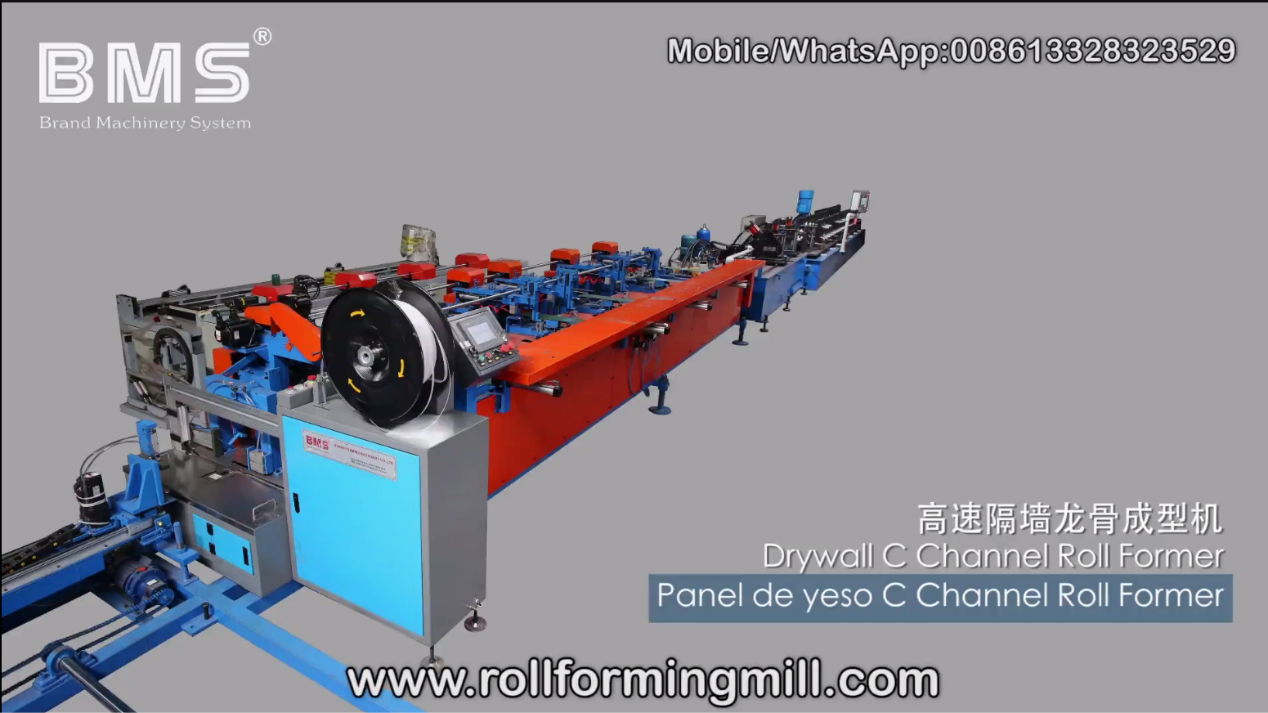
Zhangzhou, Fujian May 24, 2026 (Issuewire.com) - The modern construction landscape demands more than just structural integrity; it requires unprecedented speed and precision. As global urban development accelerates, the pressure on manufacturers to deliver high-quality steel components in shorter timeframes has intensified. In this competitive environment, the role of a China Best High Speed Roll Forming Machine Supplier becomes pivotal. High-speed production is no longer a luxury but a necessity for firms aiming to maintain a competitive edge. Leading the charge in this sector is BMS, a manufacturer that has spent 30 years refining the balance between rapid output and technical mastery. By integrating sophisticated Taiwan technology with extensive manufacturing resources, the industry now sees a new standard for cold roll forming efficiency.
The Technical Core: How Taiwan Technology Drives Speed
The distinction between a standard machine and a high-speed system lies in the engineering of its drive and cutting components. Many traditional roll forming machines operate at speeds between 10- 20 meters per minute. However, advanced systems utilizing Taiwan-based engineering principles often double or even triple this output. The primary catalyst for this jump in performance is the implementation of high-precision gear drive systems and servo-motor integration. These components allow for smoother transitions and higher rotations without compromising the profile’s accuracy.
A critical feature of these high-performance machines is the "Flying Shear" or non-stop cutting technology. Standard machines must stop the entire line to cut the metal to length, which wastes precious seconds during every cycle. In contrast, the high-speed models developed by BMS utilize a tracking cutting system. The 'Flying Shear' system utilizes servo-motor driven cutting blades with real-time encoder feedback, enabling the blade to synchronize precisely with the forming metal's speed. This non-stop cutting technology eliminates line downtime, as the profile is sheared while continuously advancing through the machine.. This innovation effectively eliminates downtime during the cutting phase, achieving 40-120 meters per minute for light-gauge profiles (e.g., studs/tracks) and 35-50 meters per minute for heavy-duty profiles (e.g., C/Z purlins).
Furthermore, the stability of the machine at these high velocities depends on the structural rigidity of the frame. High-quality factories invest in heavy-duty H-beam bases and solid side plates to dampen vibrations. When a machine operates at 50 meters per minute, even a slight oscillation can lead to dimensional errors. By combining precision rollers made from Cr12Mov(=D3=SKD11) mold steel with robust mechanical bases, manufacturers ensure that high speed does not lead to high waste.
Diverse Product Applications for High-Speed Production
The application of high-speed technology spans across a wide variety of architectural and structural components. Each profile requires specific engineering adjustments to handle the increased velocity.
High-Speed C and Z Purlin Systems
C and Z purlins serve as the backbone of industrial warehouses and large-scale steel structures. The high-speed C/Z purlin roll forming machines focus on rapid size changes and automated hole punching. Traditionally, changing from a C-profile to a Z-profile was a labor-intensive process. Modern high-speed systems incorporate PLC-controlled size adjustments. Operators simply input the desired dimensions into a touchscreen, and the rollers move into position automatically. When paired with high-speed hydraulic punching units, these machines produce finished purlins with remarkable efficiency, satisfying the demands of massive infrastructure projects.
Light Gauge Steel Framing: Stud and Track
In the realm of interior partitions and residential framing, the speed of production for studs and tracks is a major factor in project timelines. High-speed stud and track machines are designed for continuous, high-volume output. Because these profiles are often used in thousands of linear meters for a single building, a machine that can reach speeds of 60 meters per minute provides a significant advantage. These systems often feature dual-line configurations and automatic stacking, which further reduces the need for manual handling at the end of the production line.
Ceiling and Specialty Profiles
Specialty components like ceiling channels, L-angles, and battens also benefit from high-speed engineering. The high-speed ceiling channel and batten roll forming machines are engineered to handle thin-gauge pre-painted steel (0.3-1.2mm) with precision, ensuring no coating damage or profile distortion at high speeds. Even at high speeds, the rollers must form the metal without scratching the coating or distorting the thin profile. This level of control is achieved through advanced software that synchronizes the feeding, forming, and cutting stages with millisecond precision.
The Global Footprint and Reliability of a 30-Year Veteran
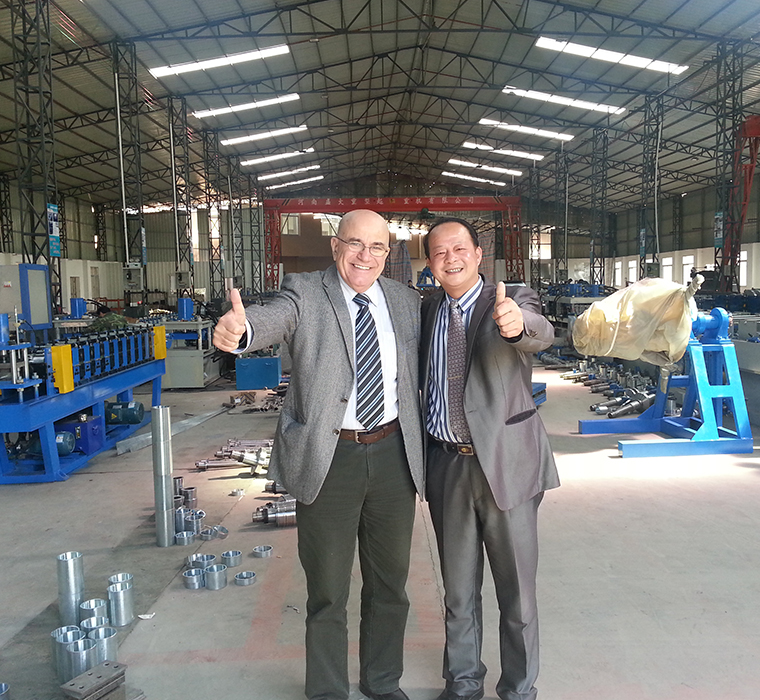
The ability to produce high-speed machinery consistently requires a massive industrial foundation. BMS has established a significant presence in China, investing in eight specialized roll forming factories. These facilities cover over 30,000 square meters, providing the space necessary for simultaneous large-scale production and rigorous testing. With a workforce of 200 skilled workers, the manufacturer ensures that every machine undergoes a thorough quality control process before shipment.
This commitment to quality is validated by international certifications. Machines are certified to CE and UKCA standards, with compliance verified by SGS, which confirms compliance with European and British safety standards. Such certifications are essential for global trade, especially when exporting to over 100 countries and regions. The export list includes technologically demanding markets such as the USA, UK, Canada, Australia, and South Korea, as well as rapidly developing regions like Saudi Arabia, the UAE, and Brazil.
The reliability of these machines is proven by a prestigious and diverse global clientele. Top-tier infrastructure groups and international steel conglomerates rely on these systems for their most critical major projects. These corporations demand equipment capable of 24/7 continuous operation under the most challenging environmental conditions. Whether facing the high humidity of tropical regions or the intense, dry heat of desert climates, the integration of high-quality components ensures that the equipment remains fully operational with minimal maintenance requirements.
Analyzing the Return on Investment (ROI)
For a business, investing in a high-speed roll forming machine is an exercise in financial optimization. While the initial capital expenditure might be higher than that of a standard machine, the long-term Return on Investment (ROI) is substantially better.
First, there is the reduction in labor costs. A single high-speed machine can often match the output of two or three standard machines. This means the factory requires fewer operators to achieve the same production targets. Additionally, automated features like the flying shear and PLC-controlled size changes reduce the risk of human error, which in turn lowers the cost associated with material waste and rejected parts.
Second, the speed of delivery becomes a powerful sales tool. In the construction industry, delays can lead to heavy penalties. A manufacturer equipped with high-speed machinery can offer shorter lead times to their clients. This capability often allows them to secure premium contracts that slower competitors cannot fulfill. By delivering 2,000 meters of profile in one hour instead of three, a company drastically increases its daily capacity and revenue potential.
Finally, the durability of the equipment must be considered. Machines built to Taiwan quality standards use superior materials for the rollers and cutting dies. This reduces the frequency of part replacements and prevents costly production halts. Over a ten-year lifespan, the savings in maintenance and the gains in productivity far outweigh the initial price difference.
Conclusion: Bridging the Gap Between Quality and Affordability
The evolution of the cold roll forming industry has reached a point where speed and quality must coexist. BMS demonstrates that it is possible to offer high-speed, Taiwan-standard technology at a competitive price point. By leveraging 30 years of manufacturing history and a vast network of specialized factories, they provide solutions that cater to the most demanding global projects.
For procurement professionals and factory owners, the choice of a supplier involves balancing technical capability with proven reliability. A supplier that supports global giants and holds rigorous international certifications offers the security needed for such a significant investment. As the demand for rapid steel construction continues to grow, high-speed roll forming technology remains the key to unlocking new levels of industrial productivity.
For more information on high-speed cold roll forming solutions and technical specifications, visit: https://www.rollforming-machinery.com/.
Media Contact
BRAND FORMING MACHINERY CO.,LTD info@rollforming-machinery.com Longchi Development Area,Zhangzhou Taiwanese Investment Zone,Fujian Province,China https://www.rollforming-machinery.com/