Shenzhen, Guangdong Aug 24, 2026 (Issuewire.com) - In residential and commercial safety, carbon monoxide (CO) alarms play a critical life-saving role. However, false alarms remain a persistent challenge across the security and home automation industries. Unwarranted alarms disrupt end users, trigger unnecessary emergency responses, and erode trust in life-safety equipment.
Is it truly possible to eliminate false positives in carbon monoxide detection without compromising quick responsiveness during genuine emergencies? Achieving this balance requires moving beyond legacy analog detection techniques and approaching sensor design from a fundamental microchip architecture and signal processing perspective.
Today, modern microelectronics, adaptive digital signal processing (DSP), and advanced electrochemical sensing make zero-nuisance detection achievable. As a leading Advanced CO Detector Factory, Shenzhen ARIZA Electronic Co., Ltd. demonstrates how integrating high-performance smart microchips into carbon monoxide detectors transforms overall system reliability. For B2B buyers, distributor networks, and smart home system integrators, understanding the core technology behind carbon monoxide detection is essential. A CO detector operates by sampling ambient air for toxic carbon monoxide gas—a colorless, odorless, and tasteless compound produced by incomplete combustion. Commercial-grade CO alarms rely on specialized electrochemical sensors that generate a tiny electrical current proportional to CO concentration. To qualify for global supply chains, these devices must accurately differentiate ambient disturbances—such as sudden humidity swings, household chemical vapors, temperature spikes, or transient harmless gases—from genuine carbon monoxide build-up.
Analysis: How ARIZA Integrates Smart MicrochipsMulti-Sensor Signal Processing and Microchip Architecture
Traditional carbon monoxide alarms rely on simple threshold comparators that trigger an alert whenever sensor electrical output crosses a predetermined voltage level. This primitive approach leaves devices highly vulnerable to transient voltage spikes, ambient temperature swings, and chemical cross-sensitivity. By incorporating dedicated high-performance smart microchips into every detection unit, the detection architecture shifts from simple threshold monitoring to continuous digital signal analysis. The onboard microchip operates as an intelligent micro-controller unit (MCU), analyzing real-time gas absorption curves rather than relying on isolated signal spikes. When gas molecules interact with the sensing element, the microchip records the rate of change, curve duration, and concentration trajectory. If a sudden signal burst does not match the known kinetic profile of carbon monoxide diffusion, the microchip identifies it as environmental noise or non-target gas interference and filters it out.
Advanced Electrochemical Sensing Mechanisms
At the core of high-precision detection lies the interaction between the smart microchip and the underlying electrochemical cell. Electrochemical sensors contain working, reference, and counter electrodes submerged in an electrolyte medium. When carbon monoxide diffuses into the cell, it oxidizes at the working electrode, releasing electrons proportional to gas concentration. In conventional setups, baseline sensor drift caused by electrode degradation or electrolyte evaporation leads to false trips over time. Smart microchips mitigate this issue by maintaining dynamic baseline management. The microchip continuously monitors internal cell impedance and baseline current, adjusting amplification gains in real time to compensate for component aging. This active baseline correction ensures that the alarm maintains uniform sensitivity throughout its operational lifespan, preventing false positives triggered by sensor degradation.
Dynamic Environmental Compensation Algorithms
Environmental variables such as relative humidity fluctuations, sudden ambient temperature changes, and non-target household volatile organic compounds (VOCs) are common causes of nuisance alarms. To resolve this, modern intelligent units embed dual-environmental calibration algorithms directly into the microchip firmware. Thermal and moisture sensors constantly feed ambient data into the central processor. When a rapid temperature spike occurs—such as when heating systems engage—the algorithm dynamically recalibrates the sensor response curve, preventing false triggers. Furthermore, advanced digital filtering algorithms evaluate gas accumulation over time against standardized time-weighted average (TWA) response curves. By analyzing exposure duration alongside real-time concentration, the device ignores brief, benign gas surges while remaining fully responsive to sustained, dangerous carbon monoxide accumulation.
Technical Evaluation of Modern Carbon Monoxide Detection Systems
Key Specifications Sourcing Teams Must Evaluate
For procurement managers, hardware engineers, and B2B distributors, evaluating carbon monoxide detectors requires reviewing several technical specifications:
- Sensor Lifetime and Reliability: Industrial-grade electrochemical sensors offer operational lifespans ranging from 3 to 10 years, requiring microchips that compensate for long-term drift.
- Power Management Efficiency: Low-power MCU architectures allow battery-operated units to maintain continuous sampling while achieving 3-year to 10-year battery life cycles.
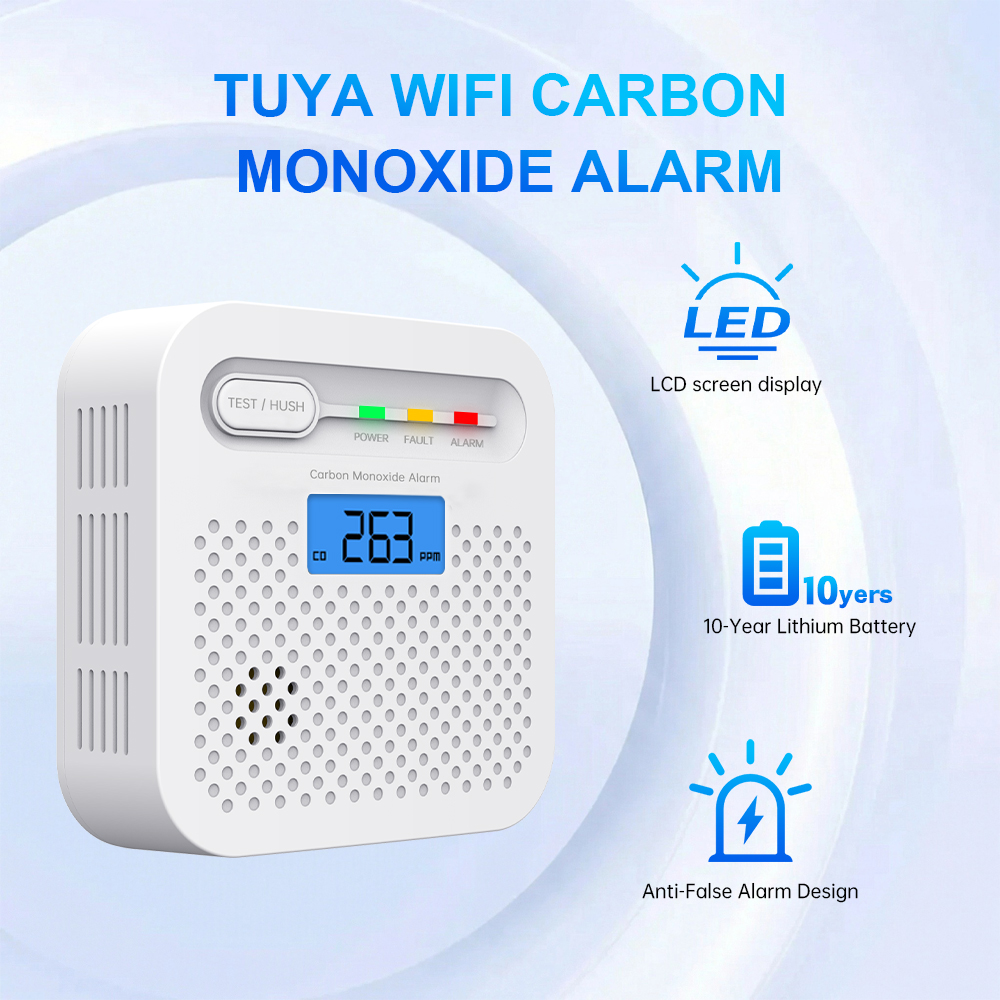
- Acoustic and Visual Alerting Output: Piezoelectric sounders delivering at least 85 decibels at 3 meters, paired with multi-color LED indicators and digital LCD screens, provide clear status updates during testing and emergency events.
- Response Time Dynamics: Compliance with international safety curves requires rapid response times at high concentration levels (e.g., within 3 minutes at 300 ppm) while preventing premature alarms at low background levels.
Protocol Compatibility and Smart Home Integration
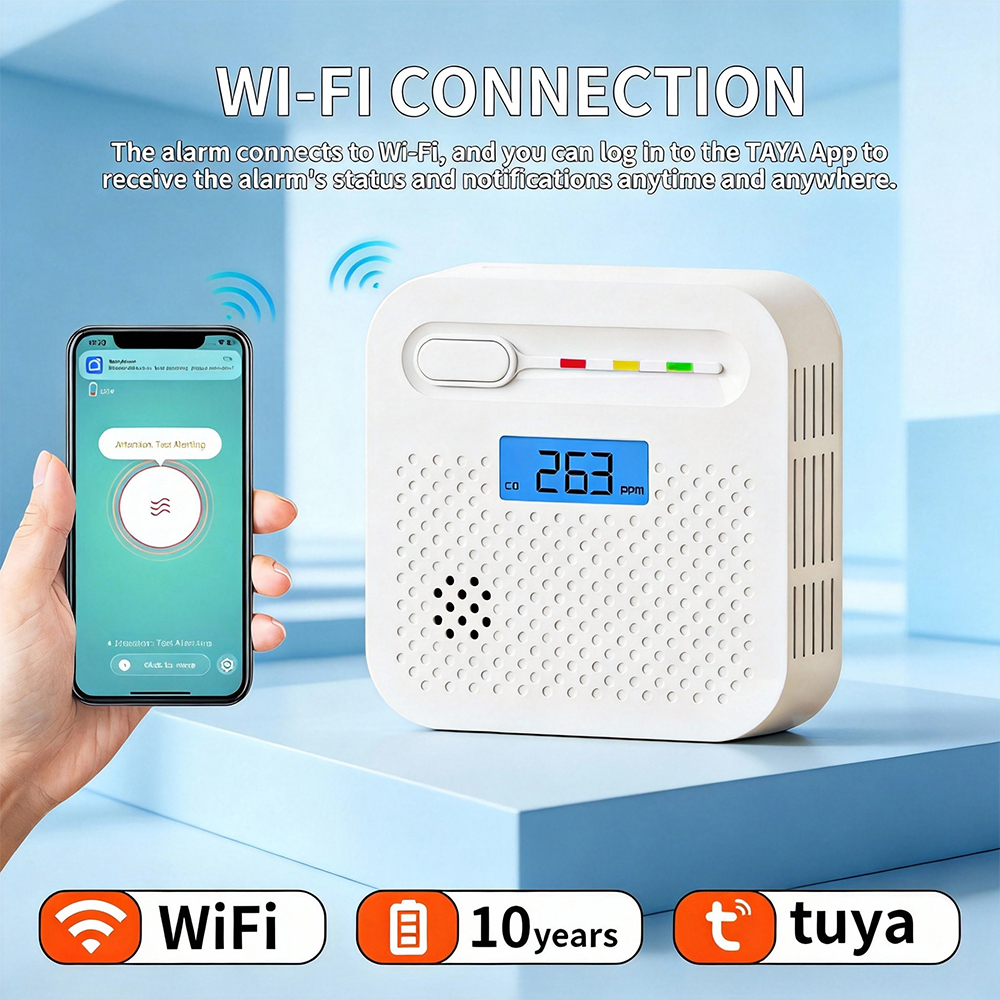
Modern security ecosystems demand seamless connectivity across diverse communication protocols. Intelligent carbon monoxide detectors are designed to support standalone operation as well as integrated wireless connectivity. Microchip architectures support multi-protocol communications, including RF 433MHz interlinked networks, Wi-Fi 2.4GHz direct-to-cloud connections, Zigbee, Z-Wave, and Bluetooth protocols. In interconnected configurations, when one detector identifies a carbon monoxide hazard, the integrated wireless chip broadcasts a signal to trigger all linked alarms across a facility or residential property simultaneously. Smart Wi-Fi variants send immediate push notifications to mobile devices via platforms such as Tuya or Smart Life, enabling real-time remote monitoring for property managers and homeowners alike.
About Shenzhen ARIZA Electronic Co., Ltd.
Shenzhen ARIZA Electronic Co., Ltd. is a world-leading smart alarm ODM company focusing on the research, development, and manufacturing of residential security and fire safety alarms. With 16 years of industry experience, ARIZA partners with over 3,000 global brand customers across more than 30 countries and regions. The company holds over 60 patents and maintains strict compliance with major international standards, including TUV EN14604, EN50291, CE, ROHS, FCC, and mandatory CCC certifications. Specializing in smart smoke detectors, carbon monoxide alarms, door and window sensors, water leak detectors, and personal safety devices, ARIZA delivers reliable ODM/OEM solutions tailored for global market success.
To learn more about ARIZA's smart security solutions and product portfolio, visit the official website:
Media Contact
Shenzhen ARIZA Electronic Co., Ltd. Alisa@airuize.com