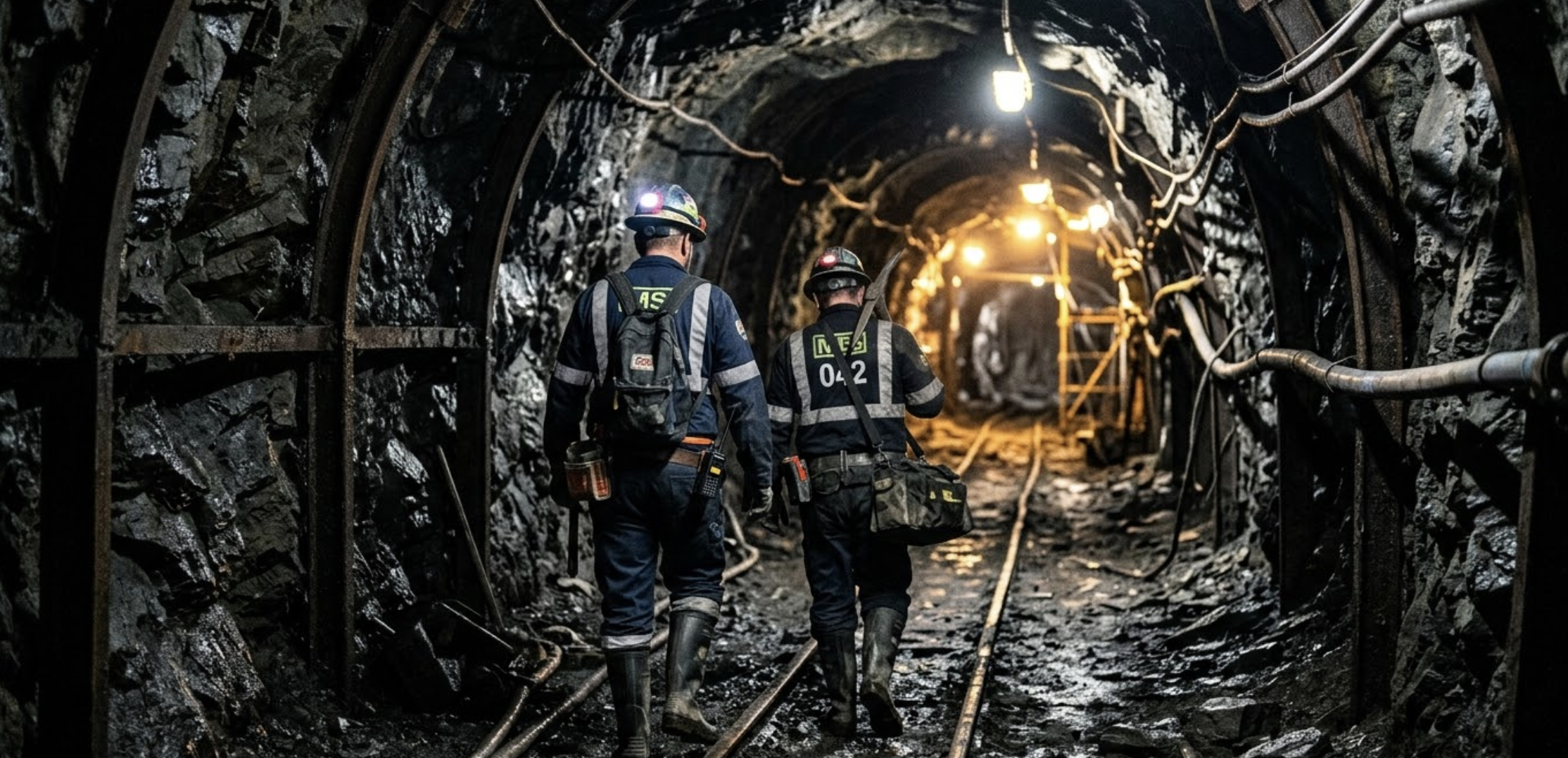
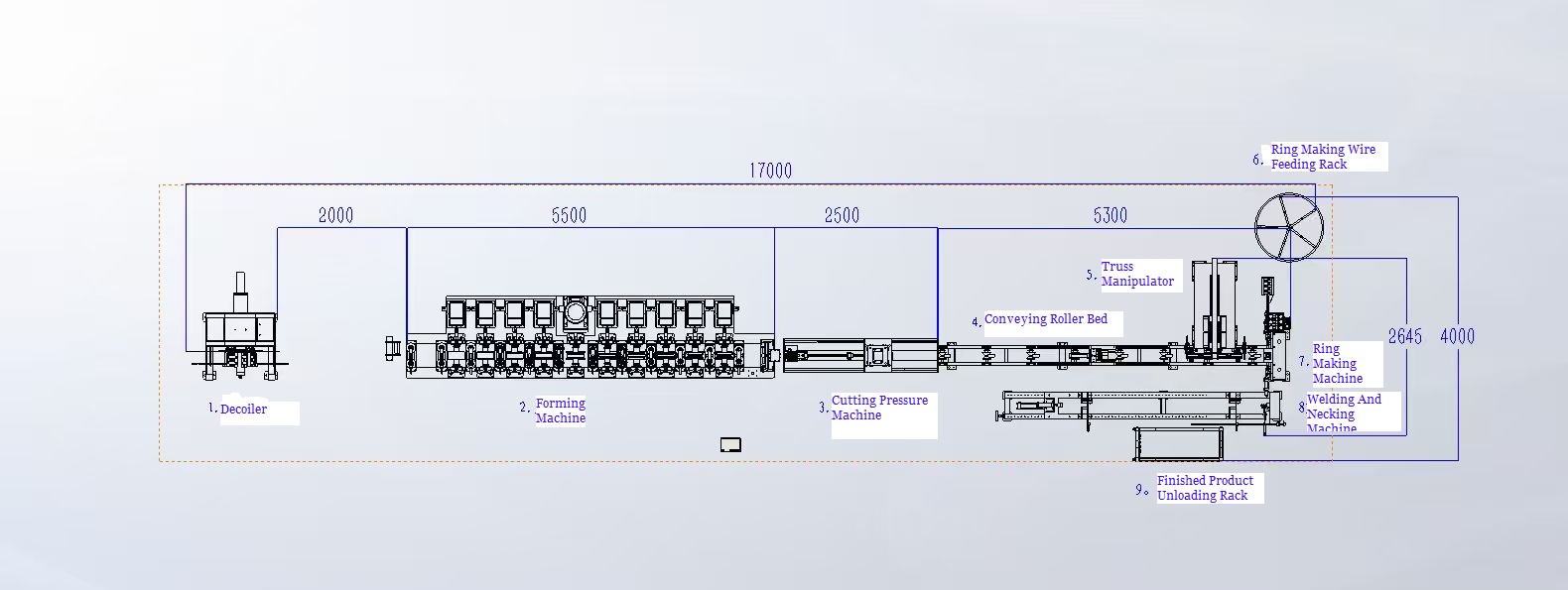
Zhangzhou, Fujian May 24, 2026 (Issuewire.com) - Subsurface mining and tunneling operations face increasingly complex geological challenges as extraction depths continue to increase. The stability of underground excavations remains a paramount concern for engineers, as stress redistribution in deep environments often leads to significant rock mass deformation. In these high-pressure zones, the structural integrity of support systems determines the safety and longevity of the entire operation. Ground support strategies must adapt to these shifting mechanical conditions, evolving toward dynamic reinforcement methods that can withstand substantial strata movement while maintaining firm anchorage to the surrounding rock.
Friction bolts, commonly referred to as split sets, have emerged as the primary solution for immediate strata stabilization in modern mining. These anchors rely on a friction-grip mechanism: a high-strength steel tube with a longitudinal slot is compressed when driven into a borehole of a slightly smaller diameter. This radial expansion generates continuous frictional resistance along the full length of the bolt, effectively pinning rock layers together. In this demanding operational environment, the reliability of support hardware depends heavily on production infrastructure from China’s top supplier of friction rock anchor roll forming machines—where precision engineering aligns with rigorous safety standards. The shift from manual fabrication to automated, high-precision manufacturing has redefined performance benchmarks for these critical safety components.
Engineering Precision: The Direct Link Between Roll Forming Consistency and Bolt Integrity
The efficacy of a friction rock anchor is fundamentally tied to its geometric accuracy. Unlike static mechanical anchors, the load-bearing capacity of a friction bolt is a direct function of the interference fit between the bolt and the borehole wall. Even minor deviations in outer diameter or longitudinal slot uniformity can result in catastrophic loss of frictional resistance. Therefore, the roll forming process must maintain strict dimensional tolerances to ensure each bolt performs predictably under extreme load conditions.
Precision-engineered machinery uses a series of calibrated rollers to transform high-strength steel strips into the specific C-shaped profile required for friction anchors. Consistency in this profile is critical: if a roll forming line fails to produce a perfectly circular cross-section, the bolt will exert uneven radial pressure on the rock mass. This uneven force distribution creates localized stress concentrations, which can cause premature failure of either the bolt or the surrounding rock. By leveraging advanced manufacturing technology that prioritizes profile uniformity, industrial suppliers ensure the friction grip mechanism remains consistent throughout the service life of the support system. This technical consistency is the cornerstone of underground structural safety, turning raw steel into a high-performance safety component through controlled mechanical deformation.
Overcoming Geological Instability Through High-Performance Anchor Production Lines
Conventional manufacturing methods often struggle to process the high-strength, low-alloy steels required for modern mining applications. As mining projects move into more seismically active zones, demand for anchors with higher tensile strength and greater elongation capacity has risen. Standard production lines frequently experience issues such as material springback or micro-cracking during the forming process, which impair the structural integrity of the finished anchors. High-performance roll forming lines address these limitations by incorporating multi-stage forming stations that gradually shape the material, reducing internal stresses and preventing surface defects.
In geologically unstable environments—such as those in deep-level gold or copper mines—the risk of structural failure is ever-present. Industrial machinery designed for these conditions must be capable of processing specialized steel grades that balance rigidity and ductility. Advanced machinery mitigates these risks by integrating real-time monitoring systems that track forming pressure and material alignment. This level of technical oversight ensures finished friction bolts can absorb kinetic energy during rock bursts or seismic events without fracturing. The move toward sophisticated production technology marks a shift in the global mining sector, where focus has shifted from simple component procurement to the implementation of integrated safety solutions.
BMS Technical Framework: The Synergy of Material Versatility and Automated Control
BMS’s technical leadership in the roll forming sector is evidenced by three decades of engineering refinement. With eight specialized factories spanning over 30,000 square meters, the company has optimized the production of friction rock anchor machinery to meet international industrial standards. The core of this technical framework lies in the synergy between material versatility and automated control. These machines are designed to handle a wide range of steel thicknesses and grades, enabling mining companies to customize their support hardware to suit specific subterranean conditions.
Automation plays a decisive role in achieving zero-defect production cycles. Modern BMS production lines integrate automated welding stations and high-speed flying shear cutting systems, which ensure anchor plates and longitudinal slots are manufactured with surgical precision. By eliminating human error from the forming and cutting processes, the equipment produces anchors that meet the stringent CE and UKCA certifications issued by SGS. Rooted in Taiwan-origin technology, this commitment to high-quality standards ensures the machinery remains durable and reliable under the high-volume demands of international manufacturing. The inclusion of 200 skilled workers in the production ecosystem further enhances this technical capacity, combining manual expertise with automated efficiency to deliver high-performance hardware.
Strategic Reliability: The Role of Leading Chinese Manufacturers in the Global Mining Supply Chain
The global mining supply chain has undergone a significant transformation, with China-based manufacturers now serving as the primary source of high-end equipment for international projects. This shift is driven by their ability to deliver machinery that combines advanced technical specifications with economic practicality. Leading manufacturers have moved beyond basic replication, instead focusing on developing proprietary technologies that meet or exceed global benchmarks. For procurement professionals, supplier selection is no longer based solely on cost, but also on the strategic reliability of the equipment and its compliance with international quality frameworks such as ISO and CE.
The credibility of these manufacturing systems is further validated by their adoption by global industrial leaders. Major entities including ArcelorMittal, Tata BlueScope Steel, CSCEC, and Sany Group have integrated these rollforming technologies into their largescale infrastructure projects. This widespread adoption across 100 countries—including the United States, Australia, Canada, and the United Arab Emirates—demonstrates global trust in the precision and durability of these machines. When toptier brands such as Euroclad (a member of the Kingspan Group) and Zamil Steel utilize these production lines, it reinforces the reputation of Chinese engineering as a pillar of the international B2B landscape. This level of market penetration stems from a consistent commitment to quality standards that prioritize enduser safety in the world’s most hazardous working environments.
Conclusion: Maximizing Safety ROI by Delivering Integrated Manufacturing Excellence
Investing in precision-engineered roll forming technology is a strategic decision that extends far beyond the initial machinery purchase. It is an investment in the long-term safety and economic viability of mining operations. High-quality friction rock anchors reduce the frequency of rehabilitation work in underground tunnels, thereby lowering the total cost of ownership for ground support systems. By ensuring every bolt produced meets the highest standards of structural integrity, mining companies can maximize their return on investment while safeguarding their most valuable asset: their workforce.
The future of the global mineral resource extraction sector lies in the integration of smart manufacturing with traditional engineering principles. As the industry ventures into deeper, more challenging terrain, reliance on high-performance manufacturing partners will only grow. The combination of proven expertise, vast production capacity, and rigorous international certification creates a foundation of trust essential for global B2B partnerships. Reliable manufacturing ensures safety is never compromised, providing a secure framework for business growth and industrial progress.
For more information on high-precision roll forming solutions, please visit:
https://www.rollforming-machinery.com/.
Media Contact
BRAND FORMING MACHINERY CO.,LTD info@rollforming-machinery.com Longchi Development Area,Zhangzhou Taiwanese Investment Zone,Fujian Province,China https://www.rollforming-machinery.com/