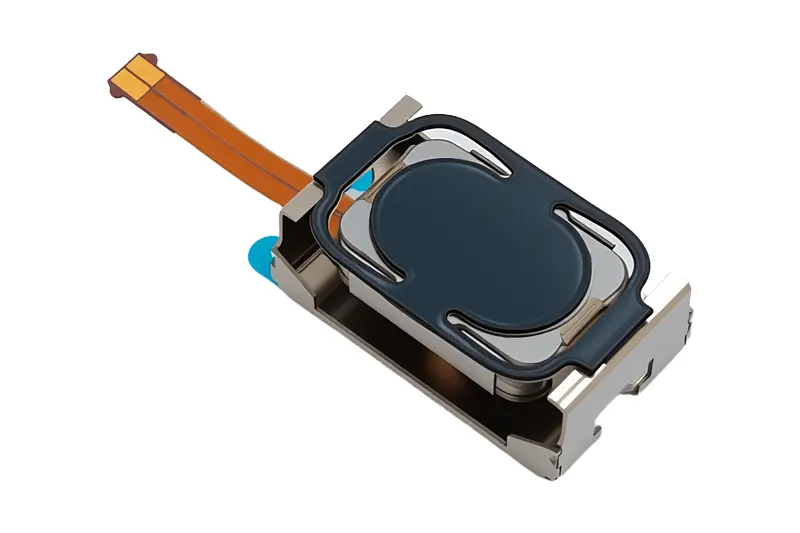

Changzhou, Jiangsu Mar 9, 2026 (Issuewire.com) - In the rapidly evolving landscape of haptic feedback technology, the role of the Global Leading LRA Manufacturer has become central to the user experience in modern electronics. Linear Resonant Actuators, or LRAs, are specialized motors that generate oscillating force across a single axis. Unlike traditional eccentric rotating mass motors, LRAs rely on a magnetic field and a spring-loaded mass to produce precise, crisp vibrations. This technology is the backbone of the "tactile language" used in smartphones, automotive touchscreens, and medical devices. As global demand for sophisticated human-machine interfaces grows, procurement professionals face the complex task of identifying partners who can deliver not just a component, but a high-performance electromechanical solution.
The Strategic Role of the Procurement Specialist
For a procurement officer or strategic sourcer, the goal extends far beyond simply finding the lowest unit price. In industries such as automotive and medical technology, a linear motor is a critical failure point; if the haptic feedback feels "mushy" or fails prematurely, the perceived quality of the entire end-product suffers. Therefore, the procurement function acts as a bridge between engineering requirements and supply chain stability. Selecting a supplier requires a rigorous vetting process that balances technical innovation, manufacturing scalability, and long-term reliability.
A Step-by-Step Framework for Selecting a High-Performance Linear Motor Partner
Navigating the global market requires a structured approach. To ensure a seamless integration of tactile technology into your project, consider the following five-step evaluation process.
Step 1: Evaluating Research and Simulation Capabilities
A reliable exporter must offer more than just an off-the-shelf catalog. The initial phase of selection should focus on the supplier’s R&D infrastructure. High-performance LRAs require precision tuning to match the resonant frequency of the device they inhabit.
Leading providers, such as BESTAR Holdings Co., Ltd, distinguish themselves through independent innovation institutes. By utilizing advanced simulation software and core algorithms, a manufacturer can predict how a motor will behave within a specific housing before a single physical prototype is built. This capability reduces time-to-market and ensures that the component meets the specific acceleration and response time requirements of the application.
Step 2: Assessing Material Science and Core Technologies
The performance of a linear motor is fundamentally dictated by the materials used in its construction. Procurement teams should inquire about the supplier’s expertise in piezoelectric ceramics and electromagnetic technologies.
For instance, companies that have deep-rooted expertise in acoustic and sensing components often have a superior understanding of vibration patterns and frequency response. BESTAR’s history, dating back to 2002, demonstrates a transition from traditional acoustics to sophisticated miniature active cooling and tactile modules. This cross-disciplinary knowledge is vital because an LRA does not operate in a vacuum; it must coexist with heat dissipation systems and acoustic cavities without causing interference.
Step 3: Verifying Manufacturing Standards and Scalability
High performance is meaningless if it cannot be replicated across millions of units. When vetting an exporter, look for evidence of high-end manufacturing standards and "rapid mold making" capabilities. This ensures that the transition from a specialized prototype to mass production is fluid.
A reliable partner should demonstrate an "ecosystem-level" collaboration, meaning they are integrated into the design systems of global industry leaders. This integration usually implies that the supplier has passed rigorous audits for quality management systems and environmental compliance, which are essential for sectors like automotive and consumer electronics.
Step 4: Analyzing Application-Specific Experience
Not all LRAs are created equal. A motor designed for a wearable fitness tracker will have vastly different specifications than one intended for an automotive dashboard or a surgical tool.
- Automotive:Requires high durability and resistance to temperature fluctuations.
- Medical:Demands extreme reliability and precise feedback for robotic-assisted surgery.
- Consumer Electronics:Prioritizes miniature footprints and power efficiency.
A versatile exporter will have a diverse portfolio, showing successful implementations across these varied fields. Reviewing a company’s product application history—spanning from security alarms to electronic heat dissipation—provides a clear picture of their ability to adapt haptic technology to different mechanical environments.
Step 5: Auditing Certifications and Past Performance
Finally, objective proof of quality is non-negotiable. This includes ISO certifications, industry-specific qualifications (such as IATF 16949 for automotive), and a documented history of participation in international trade exhibitions. Participation in global forums indicates a transparent business model and a commitment to staying at the forefront of technological trends.
Integrating Tactile, Auditory, and Thermal Solutions
The modern trend in device design is the "intelligent evolution" of interactive components. We are moving away from isolated parts toward integrated modules where haptic feedback (LRAs), sound (acoustic components), and thermal management (active cooling) work in unison.
BESTAR Holdings Co., Ltd has positioned itself at this intersection. By leveraging their New Technology Research Institute, they have moved beyond being a simple component provider to becoming a solutions provider. Their work in next-generation piezoelectric ceramics and active cooling systems allows them to address the "human-machine interaction" challenge holistically. When a user touches a screen, they expect a tactile response that feels natural, a sound that confirms the action, and a device that remains cool to the touch despite high processing loads.
Conclusion: Ensuring Long-term Supply Chain Success
Choosing a linear motor exporter is a decision that impacts the tactile identity of your brand. By focusing on the five steps of R&D capability, material science, manufacturing scalability, application experience, and certified quality, procurement professionals can mitigate risk and drive innovation.
A partner who combines patented innovation with a proven track record in diverse industries—from home appliances to engineering machinery—is an invaluable asset. As we look toward the future of intelligent interfaces, the collaboration between high-performance manufacturers and forward-thinking procurement teams will continue to define the boundaries of what is possible in the digital and physical worlds.
For more information on high-performance linear motors and integrated electronic solutions, please visit the official BESTAR website.
Official Website: https://www.global-be-star.com/
Media Contact
BESTAR Holdings Co., Ltd. finn.wang@be-star.com