
Xian, Shaanxi May 22, 2026 (Issuewire.com) - Fulvic acid fertilizers have attracted growing interest from agronomists and procurement specialists across global markets. Yet sourcing decisions in this category often rest on incomplete information. Buyers compare products by total humic substance percentages without examining molecular composition, or they select on price without considering whether the underlying raw material or processing technology can deliver consistent field performance. Working with an Advanced Fulvic Acid Fertilizer Manufacturer means navigating these distinctions with precision — understanding not just what a product contains, but why those specifications matter at the root level. This guide addresses that gap across six practical decision points.
Guide Point 1 — Know What You're Actually Buying: Fulvic Acid vs. Humic Acid
The first sourcing error often happens before any product comparison begins. Fulvic acid and humic acid both originate from organic matter decomposition, but they differ substantially in molecular structure and functional behavior. Humic acid carries a larger, more complex molecular structure. It works primarily by improving soil physical properties — aggregate formation, water retention, and cation exchange capacity. Fulvic acid, by contrast, has a lower molecular weight. It moves freely in soil water across the full pH spectrum, penetrates plant cell membranes directly, and functions as both a nutrient carrier and a metabolic activator at the root surface.
A product labeled as "humic substances" or "humic extract" may contain very different proportions of each. Buyers who understand this distinction read specifications accurately and ask more productive questions during supplier evaluation.
Guide Point 2 — Trace the Raw Material: Why Leonardite Origin Determines Output Quality
Fulvic acid quality starts with geology. The most agriculturally effective products draw from young leonardite — a soft, oxidized form of lignite found near the earth's surface. Young leonardite retains a high density of bioactive functional groups, including hydroxyl, carboxyl, and phenolic hydroxyl groups. These groups drive the product's chelating capacity, its ability to solubilize locked nutrients, and its interaction with root cell membranes. Older or lower-grade coal derivatives carry fewer active groups and deliver reduced bioactivity per unit applied.
Citymax Group, founded in Xi'an, China in 2012, specifically selects young leonardite with high agricultural value as the foundation for its Ultra Fulvic product. That upstream sourcing decision shapes everything downstream — from the efficiency of subsequent processing steps to the density of active functional groups in the finished product. It also determines the ceiling for what processing technology can achieve.
Guide Point 3 — Evaluate the Processing Technology: What MRT Delivers for Bioavailability
Raw material quality sets the ceiling; processing technology determines how much of that potential actually reaches the crop. Ultra Fulvic applies MRT — molecular recombination technology — as its activation method. This process restructures fulvic acid molecular chains to maximize the exposure and activity of functional groups, improving the product's ion exchange capacity, its chelation of trace elements, and its uptake kinetics at the root surface.
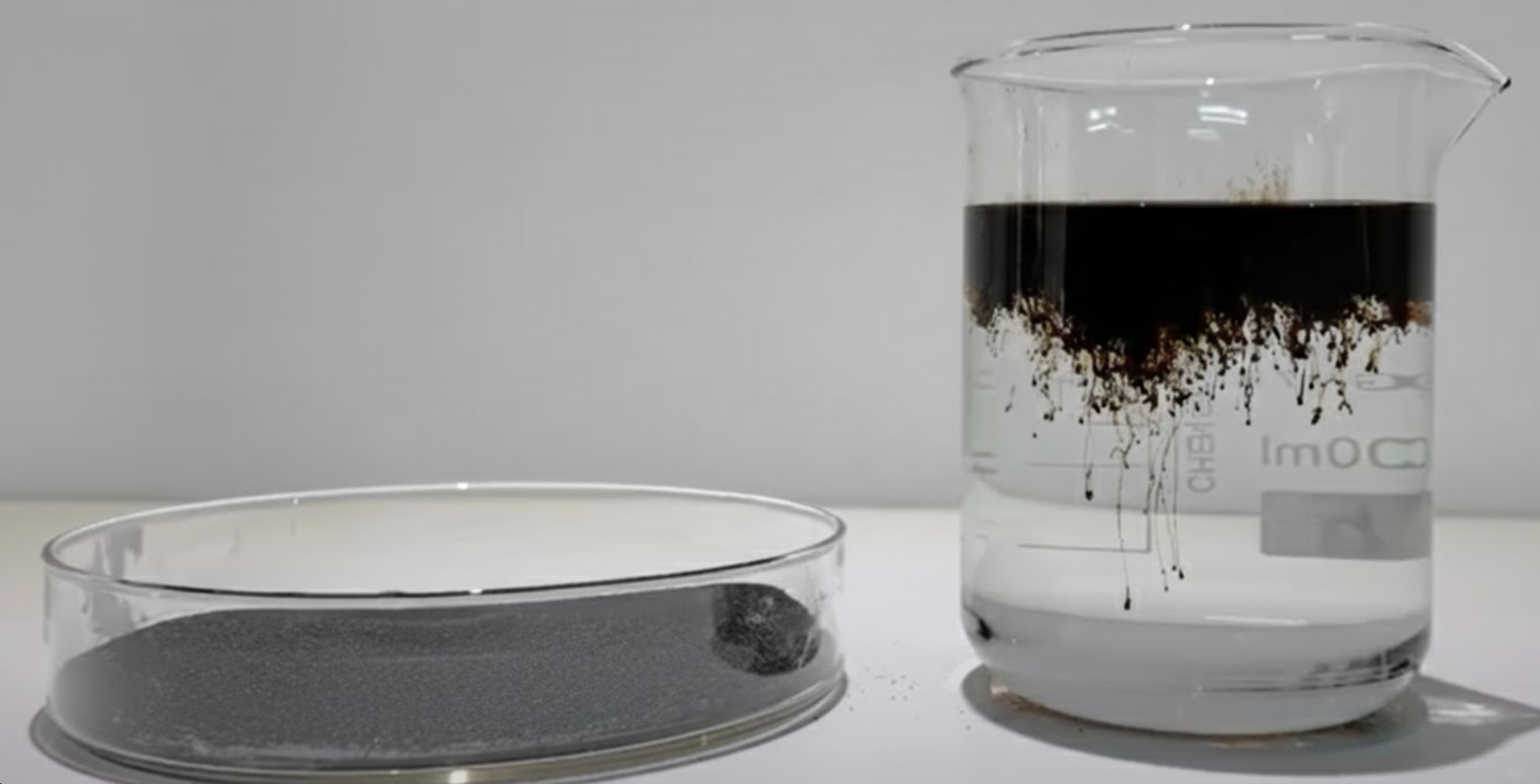
The practical outcomes are measurable. Ultra Fulvic dissolves completely within 10 seconds. It remains fully stable across a pH range of 2 to 12. It does not precipitate under hard water conditions up to 30 degrees. Each property carries a direct implication for field use. Fast dissolution supports drip and fertigation system compatibility. Broad pH stability enables tank-mixing with acidic inputs. Hard water resistance ensures reliable performance across diverse water quality conditions — a critical variable for distributors operating in multiple regional markets.
Guide Point 4 — Understand the "Space-Power-Synergy" Framework: Fulvic Acid as Root System Engineering
The conventional framing of fulvic acid as a generic "soil conditioner" undersells its agronomic function. A more precise model organizes its effects into three interconnected dimensions.
Space: fulvic acid loosens compacted soil and promotes aggregate formation. This physically expands the volume of soil that roots can colonize — a foundational condition for root system development in degraded or dense soils.
Power: fulvic acid activates root metabolism and stimulates fine root initiation. It enhances the efficiency with which roots absorb water, nitrogen, phosphorus, potassium, and trace elements. Specifically, the hydroxyl and phenolic hydroxyl functional groups in mineral fulvic acid fix phosphorus, potassium, and nitrogen, directly improving fertilizer utilization efficiency.
Synergy: fulvic acid supports rhizosphere microbial activity, alleviates salt stress, and reduces the obstacles associated with continuous cropping. When combined with other biostimulant inputs, it amplifies overall nutrient utilization rather than simply adding its own effects in isolation.
This three-dimensional framework helps distributors and end-users articulate what fulvic acid actually does within a broader crop nutrition program — and it explains why lower-grade alternatives often fail to deliver visible results despite similar label claims.
Guide Point 5 — Build a Sourcing Checklist: Six Technical Criteria That Separate Reliable Manufacturers
Practical sourcing requires measurable criteria. The following six checkpoints help buyers move beyond label scanning toward informed supplier evaluation.
First, raw material disclosure: does the manufacturer specify leonardite grade and geographic origin? Vague sourcing descriptions often signal lower-grade inputs.
Second, fulvic acid proportion within total humic extract: what share is genuinely fulvic acid versus humic acid or unactivated material? Ultra Fulvic carries 80% total humic extract, split equally — 40% mineral fulvic acid and 40% humic acid — providing both immediate root-level activity and longer-term soil improvement.
Third, functional group data: does the manufacturer provide information on hydroxyl, carboxyl, or phenolic group content, or only report total humic substances?
Fourth, dissolution speed and water solubility: essential for compatibility with drip and foliar application systems.
Fifth, pH and hard water stability: critical for consistent performance across the water quality variations found in international markets.
Sixth, certification coverage: does the product hold OMRI, ECOCERT, or comparable certifications that open organic market access in target regions? Ultra Fulvic carries OMRI certification — a standard that confirms ingredient suitability for certified organic use in both the United States and Canada.
Applying these criteria systematically narrows the field considerably and surfaces genuine technical differentiation where it exists.
Guide Point 6 — Assess the Manufacturer Beyond the Product: Infrastructure, Adaptability, and Supply Confidence
The final evaluation layer moves from product specification to partner assessment. A product that performs well in trials still requires a supply partner capable of maintaining consistency, adapting to regulatory changes, and supporting distributor growth over time. Citymax Group approaches this through layered investment — not just in production capacity, but in the technical infrastructure that keeps formulations relevant as market conditions evolve. The MAXBIO Synergistic R&D Platform, for instance, tests how fulvic acid behaves alongside amino acids, seaweed extracts, and microbial inoculants under real combined-application conditions, generating data that isolated product testing cannot provide. That research orientation carries through to how the company engages with distributors: product recommendations draw on multi-geography efficacy data, and formulation adjustments can be made to match local water chemistry, crop profiles, or application system requirements.
On the compliance side, the product range carries OMRI, ECOCERT, ISO 9001, EU REACH, and EU BV certifications — coverage broad enough to serve both organic and conventional markets across North America, Europe, and major export destinations. Thirty-plus verified distribution partners across more than 70 countries reflect a supply network built for international scale rather than opportunistic export. A product specification gets a sourcing decision to the shortlist. The manufacturer's technical infrastructure, certification coverage, and supply track record determine whether that decision holds up over time.
For product samples, technical documentation, or distributor inquiries, visit: https://www.citymax-group.com/.
Media Contact
Xi’an Citymax AgroChemical Co.,Ltd. Infor@citymax-agro.com +86 29 89286649 13th Floor, DaJingInternational, No. 67, Keji 2ndRoad, High-tech Zone, Xi'an City, Shaanxi Province, China https://www.citymax-group.com/