


Delhi, India Jul 13, 2023 (Issuewire.com) - Rupus Global Herbal Research & Development Institute Limited based out of Latvia is one of the fastest growing research driven global herbal company engaged in serious research activities of ancient herbal sciences. Rupus Global Herbal Research & Development Institute believe in total quality management and total quality compliance, we provide validation through independent laboratory testing also. Rupus Herbals aim to bring high quality Ayurvedic products in the global market and support ancient Heritage and practices. It aims to provide customers with best and effective products that help them maintain a healthy lifestyle. To utilize modern technology, R&D and ancient Indian wisdom to create products that help heal from within.
This report lays out a comprehensive analysis of Spirulina. The focus areas include its nutritional value, industrial applications, and market potential. Spirulina has gained copious attention for its nutritional index and potential health benefits. The objective of this report is to cover the various applications and properties of Spirulina and to evaluate its market potential in different industries.
https://pharmaleaders.tv/a-comprehensive-analysis-of-spirulinas-nutritional-value-industrial-applications-and-market-potential/
The first section entails the nutritional value of Spirulina, highlighting its high protein content, essential amino acids, vitamins, minerals, and antioxidants. It examines the scientific research and studies on Spirulina's health benefits, including its antioxidant, anti-inflammatory, and immune-modulating properties. Also, the potential role of Spirulina in lowering cholesterol, and blood pressure, and improving lipid profiles is elaborated.
Furthermore, this report delves into the industrial applications of Spirulina exploring its use as a dietary supplement, along with its incorporation into the food industry, considering its potential in functional foods, beverages, and nutritional supplements. The emerging use of Spirulina in cosmetics, biofuels, wastewater treatment, and other sectors is also discussed.
A thorough review of relevant scientific literature and industry reports was undertaken to conduct this analysis. Critical resources for this study include:
Spirulina, a form of blue-green alga, has recently garnered a lot of attention due to its nutritional value. It has a multitude of potential health benefits and various industrial applications. This introduction gives an overview of spirulina’s characteristics, as well as explores its historical use and cultural significance.
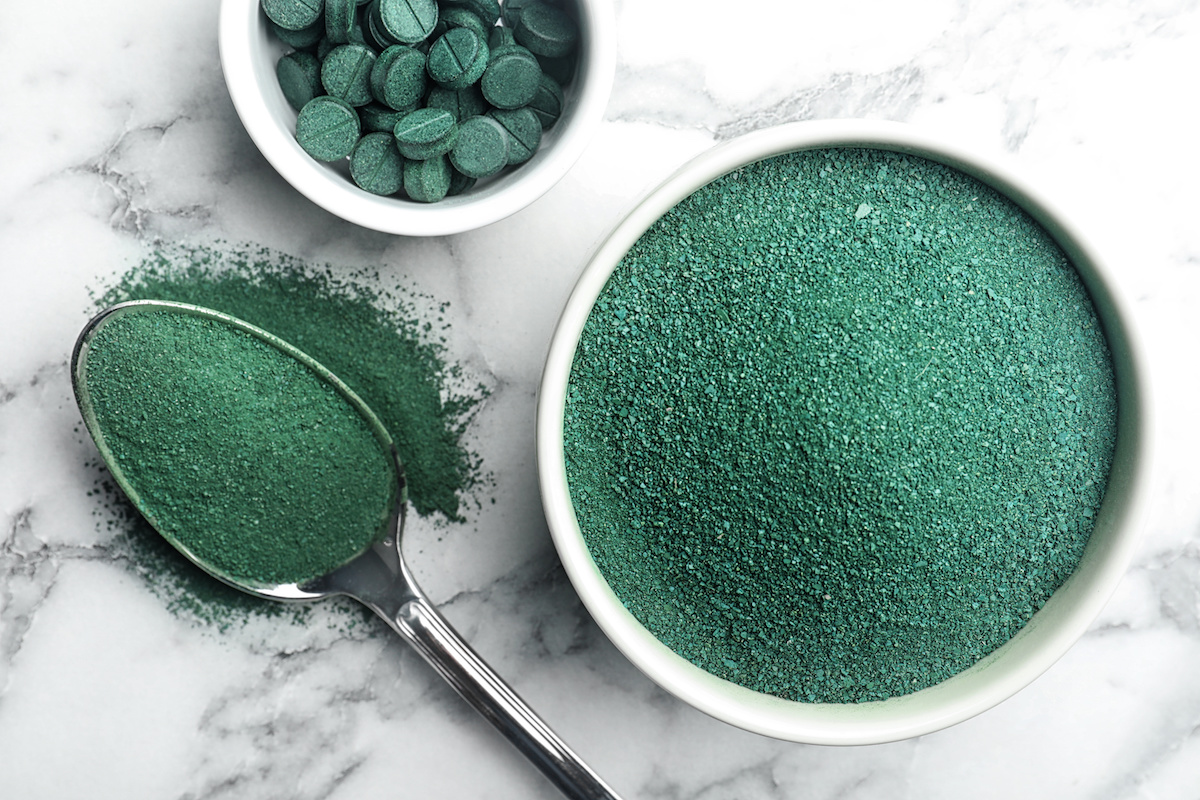
Spirulina is a microorganism from the cyanobacteria family. It grows naturally in alkaline waters, in tropical and subtropical regions. Its distinct spiral shape is the reason behind its name. One of the most unique characteristics of spirulina is its nutrient composition. It is considered a complete protein source, containing all essential amino acids, and is particularly high in vitamins, minerals, antioxidants, and phytonutrients.
The use of spirulina dates is rooted in the past of human civilization. There has been evidence of its consumption by various ancient civilizations like the Aztecs in Mexico and the Kanem Empire in Chad. Traditionally, Spirulina was gathered by The Kanembu people of Chad from Lake Chad and used as a food source. In the same manner, the Aztecs used spirulina from Lake Texcoco as a staple food.
Spirulina has its fair share of cultural significance. For instance, spirulina is an integral part of traditional cuisine and indigenous medicine in some African countries. In addition to that, certain culinary traditions have adopted spirulina as a preferred ingredient in their practice owing to its nutritional value, and bright color.
The global demand for Spirulina has seen a sharp rise due to its unique nutrient profile and potential health benefits. It has gained attention as a dietary supplement due to sources suggesting its antioxidant, anti-inflammatory, and immune-enhancing properties. Moreover, spirulina has been incorporated into the food industry, making its way into energy bars, smoothies, and health drinks.
The more we comprehend the historical and cultural aspects of spirulina, the more we recognize its potential to solve contemporary problems in nutrition and health
Note: While the historical and cultural significance of spirulina mentioned above is based on general knowledge, it is recommended to conduct further research and refer to specific scholarly sources to provide more detailed and accurate information in your research paper.
Please note that you will need to consult these sources directly to gather accurate and up-to-date information for your research paper. Here are a few potential references you can explore:
Spirulina is a nutrient-rich food that has a number of potential health benefits. It is a good source of protein, vitamins, minerals, and antioxidants. Spirulina has been shown to have a number of health benefits, including improved immune function, reduced inflammation, increased energy levels, improved cognitive function, weight loss, and cancer prevention. Spirulina has also been shown to have beneficial effects on cholesterol, blood pressure, and lipid profiles. More research is needed to confirm these benefits, but spirulina is a promising food that has the potential to improve human health.
Conclusion
Spirulina is a generally safe and healthy food for most people. However, it is important to be aware of potential side effects and interactions with medications. It is also important to source spirulina from reputable manufacturers. In conclusion, spirulina offers a range of benefits and potential applications. It is a nutrient-dense food source with high protein content, essential amino acids, vitamins, minerals, and antioxidants. The consumption of spirulina has been associated with various health benefits, including its antioxidant, anti-inflammatory, and immune-modulating properties. Scientific studies have shown its potential in reducing cholesterol, blood pressure, and improving lipid profiles. Furthermore, spirulina finds wide-ranging industrial and commercial applications. It is used as a dietary supplement due to its nutritional profile and is increasingly incorporated into the food industry for its functional properties. Moreover, spirulina shows promise in emerging fields such as cosmetics, biofuels, and wastewater treatment, offering new avenues for innovation and sustainable practices.
The cultivation of spirulina involves specific growth conditions and various cultivation systems. Open ponds and closed systems each have their advantages and disadvantages, and sustainable cultivation methods are being explored to enhance efficiency and minimize environmental impact.
Looking to the future, further research is warranted to explore additional health benefits, optimize cultivation processes, and investigate the potential of spirulina in various applications. Continued scientific inquiry and collaboration between researchers, manufacturers, and regulatory bodies will contribute to a deeper understanding of spirulina's potential and ensure its safe and effective utilization.
In conclusion, spirulina stands out as a remarkable natural resource with a diverse range of benefits and potential applications. Through comprehensive analysis, this research paper has highlighted its nutritional value, industrial applications, market potential, safety considerations, and cultivation techniques. The findings have been supported by a robust body of scientific literature, providing credibility to the information presented.
Authors
Dr. Kannan Vishwanatth based out of Riga, Latvia, is the Founder & Managing Director of our Hong Kong-based pharmaceutical company Rupus Global Limited & Dr Ashley’s Limited. He holds a doctorate in Business Management (Ph.D.). Dr. Kannan Vishwanatth is a global opinion maker on contemporary issues & a much sought-after speaker in various international forums. As a Research Scholar, Dr. Kannan has published many research papers & is associated with many top-notch International Institutions as Editorial Reviewer. Dr. Kannan Vishwanatth is a top academic researcher at the Garwood Innovation Fellow at Garwood Centre of Open Innovation, Haas School of Business Berkeley University of California & Senior Research Scholar at the Latvian Academy of Sciences in Riga. Dr. Vishwanatth further pursues higher studies at the University of Azteca European Programs. Having mastered Chemical Engineering, Vishwanath started his entrepreneurial journey a decade ago and formed a successful mid-sized pharmaceutical company with a major thrust on API (Active Pharmaceutical Ingredient).
Ms. Swadha Arora is a researcher & the Program Coordinator, Berkeley Open Innovation Practicum at the University of California, Berkeley. Her academic engagements include research in implementation science, human rights to health, social justice, health services delivery. Swadha is academically endowed with BE in Chemical Engineering from Thapar Institute of Engineering Technology, Patiala (Punjab), India.
……………………………………………………………………………………………………….
Article Source :
Media Contact
DR PRADEEP PANIGRAHY drpradeeppanigrahyofficial@gmail.com +371 206 69 058 Gales Iela 3, Riga LV 1015 Latvia https://rupusherbals.lv/




