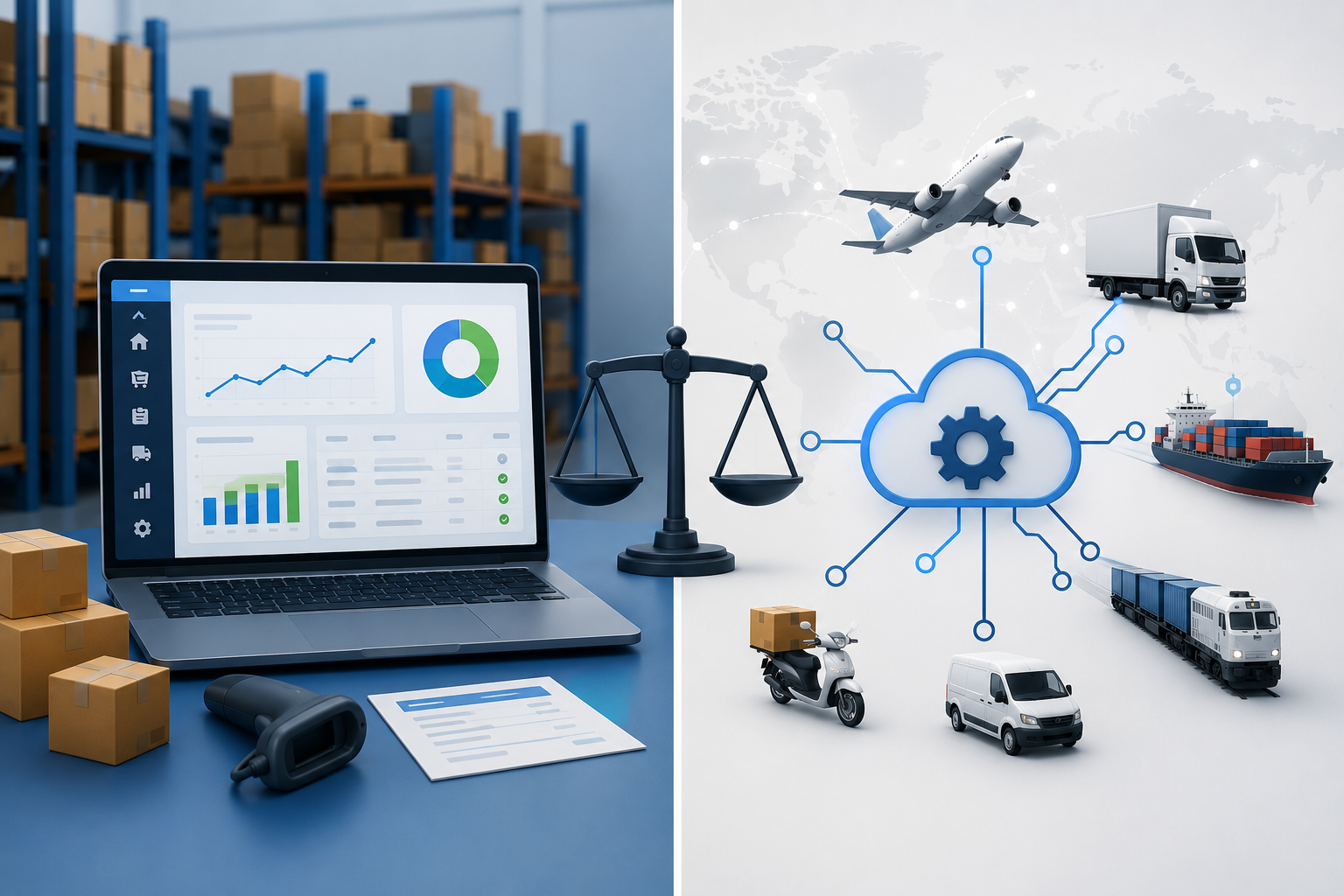
Salt Lake City, Utah Aug 10, 2026 (Issuewire.com) - ShipGenius LLC is a leading eCommerce shipping software and multi-carrier shipping platform that helps businesses streamline fulfillment, reduce shipping costs, and automate logistics. With powerful shipping, order management, and 3PL solutions, ShipGenius enables businesses to scale efficiently and ship smarter.
A small online store and a fast-growing 3PL warehouse don't need the same shipping setup. One needs a dashboard they can log into today. The other needs a system their developers can build on. That difference decides which tool actually works.
What Is 3PL eCommerce Shipping Software?
3PL e-commerce shipping software is a ready-made platform that connects a business to carriers through a visual dashboard; no coding is needed. It plugs into stores like Shopify or WooCommerce and lets staff print labels, compare rates, and manage orders right away.
Warehouse teams and store managers are the main users here. They log in, see their orders, and print labels in minutes. There's no waiting on a developer to build anything first.
What Is a Multi-Carrier Shipping API?
A multi-carrier shipping API is a set of tools developers use to connect their own software directly to carrier networks like UPS, FedEx, or DHL. It runs in the background, with no dashboard of its own.
Engineering teams and IT departments use it to build shipping logic straight into a custom ERP, WMS, or checkout flow. The business controls every part of how it looks and works.
3PL Shipping Software vs. Multi-Carrier API: Key Differences
The two options serve different teams and different timelines. One gets a business shipping fast. The other gives full control, but it takes more time and technical work to set up.
Strategic Dimension
Turnkey Shipping Software
Multi-Carrier API
Primary User
Warehouse staff, store managers, 3PL operators
Developers, engineering teams
Setup Time
Hours to days
Weeks to months
Interface
Web dashboard, batch printing
Headless, embeds into custom systems
Rate Shopping
Built-in visual comparison
Programmatic, rule-based
Flexibility
Standard workflows
Full custom control
Which One Fits Your Business?
The right pick depends on two things. How much do you ship, and do you have developers on staff who can build and maintain custom code?
When Turnkey Software Makes Sense
A growing store or a 3PL that wants results today should lean towards turnkey software. It comes with pre-negotiated carrier rates, a working dashboard, and order syncing already built in. No developer is needed to get moving.
When a Developer-First API Makes Sense
A large enterprise with its own checkout or warehouse system should look at an API instead. It gives full control over the customer experience and can plug straight into custom hardware or proprietary tools already in place.
How to Choose the Right Shipping Model
Picking a shipping setup isn't a guess. It comes down to a few checks a business can run through in order.
- Check your order volume and tech team. If there's no in-house developer, turnkey software gets a business shipping the fastest.
- List every sales channel and carrier you need. Match them against what each platform already supports natively.
- Set up rate rules. Base them on weight, zone, and delivery speed so the cheapest carrier gets picked automatically.
- Roll out printers and tracking. Connect thermal printers and automated tracking emails once the rules are live.
Don't spend developer time rebuilding features that already exist. A platform that offers both a working dashboard and a solid API gives a business room to grow either way.
Common Mistakes to Avoid
A few missteps show up again and again when businesses pick a shipping setup.
- Choosing an API without the developer hours to build and maintain it
- Locking into software that can't scale once order volume grows
- Skipping the fine print on per-order or per-label fees
FAQs
What does 3PL shipping software do?
It connects a business to carrier accounts through one dashboard, so staff can compare rates, print labels, and track orders without writing code.
Is a shipping API better than shipping software?
Neither is better on its own. An API gives more control but needs developer time. Software gets a team shipping faster with less setup.
Can a business use both at once?
Yes. Many warehouses run a dashboard for daily label printing and an API for custom checkout or inventory syncing at the same time.
Which option costs less to start?
Turnkey software usually costs less upfront since there's no build cost. Options like ShipGenius, a platform based out of Salt Lake City, Utah (USA), ShipStation, and Pirate Ship all offer free or low-cost entry tiers, so it's worth comparing rates and fees before picking one.
Does switching from software to an API mean starting over?
Not always. Some platforms let a business keep its carrier accounts and order history even after moving to API access, so check this before committing to a switch.
Media Contact
ShipGenius LLC shipgeniusllc@gmail.com 08013580112 2795 E Cottonwood Parkway, Suite 300 #1061, https://shipgeni.us/