Detroit, Michigan Jan 1, 2026 (Issuewire.com) - Combat-injured veterans in Michigan are losing an estimated $1.4 million in earned military retirement pay every month because Congress has not acted to fix a long-standing federal retirement offset affecting medically retired service members.
Advocates say progress on the Major Richard Star Act has stalled in the U.S. Senate following a procedural objection raised during floor consideration, leaving thousands of Michigan families absorbing the financial consequences.
Media Coverage of the Senate Objection
The stalled legislation has drawn significant media attention regarding the obstacle in the Senate. A recent report by WTVA9 News detailed the objection by Senator Roger Wicker during Senate proceedings that prevented the bill’s passage. The coverage also highlighted a billboard campaign launched by PassTheAct.org to raise awareness about the delay in allowing a vote. The report is available on YouTube.
Senior Chief Shane Junkert, USN (Ret.), is a decorated combat veteran whose awards include Army commendations for joint service deployments. Junkert completed six combat deployments and was medically retired after 18.5 years of service due to combat-related injuries.
“Senator Elissa Slotkin isn’t just a Senator; she is a former senior Pentagon official and intelligence analyst who knows the Defense budget better than almost anyone in Congress,” Junkert said. “In my view, she understands where flexibility exists in the budget process. Allowing a procedural objection to continue delaying relief that advocacy groups estimate at $16.7 million a year for Michigan veterans reflects a lack of urgency.”
The scope of the loss in Michigan
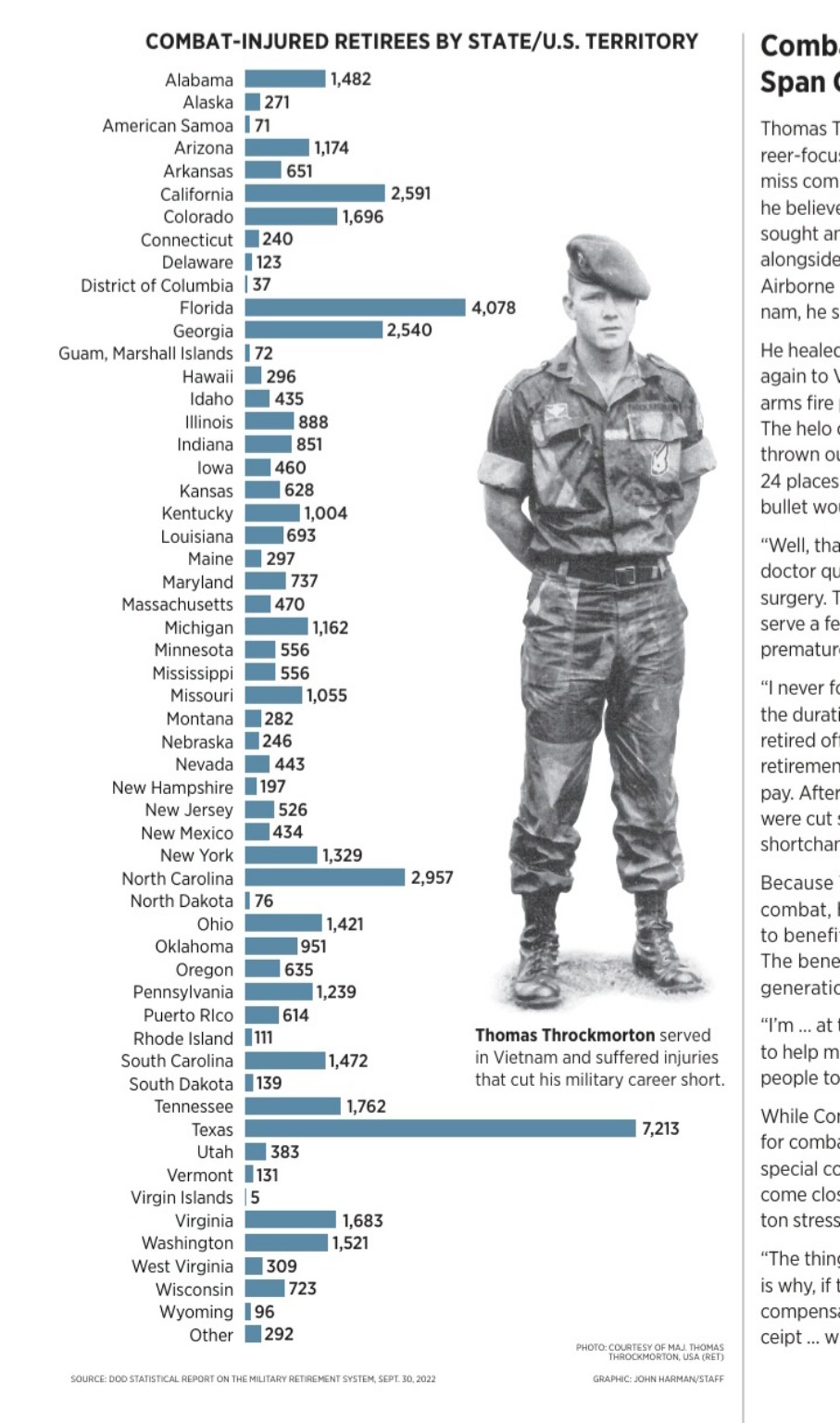
According to estimates compiled by veteran advocacy groups, 1,162 combat-injured, medically retired veterans in Michigan are affected by the offset the Major Star Act is designed to end. With an average loss of approximately $1,200 per month per household, Michigan veterans are losing an estimated $1,394,400 every month, or approximately $16.7 million annually.
On a weekly basis, that amounts to roughly $300 per household—money typically used for groceries, fuel, prescriptions, utilities, rent, or school expenses.
“This is $300 a week that advocates say is being drained from Detroit, Grand Rapids, and Flint,” Junkert said. “Senator Peters and Senator Slotkin have built their reputations on national security credentials. Advocates are calling on them to use that experience to secure the retirement benefits of the men and women who secured the nation.”
Michigan’s role in national defense
Michigan is a vital component of the national defense infrastructure, home to Selfridge Air National Guard Base and the Battle Creek Air National Guard Base. The state’s industrial base produces the ground vehicles and weapons systems used by troops in combat zones around the world.
Many of the veterans affected by the offset trained, deployed, or served through these Michigan units before returning home with combat injuries that ended their military careers early.
“Michigan builds the tanks and flies the tankers that allow the military to fight,” Junkert said. “The veterans who operated that equipment and came home injured deserve the full retirement they earned. They shouldn't have to fight a second war against their own government just to get paid.”
What the offset does
The Major Star Act applies to a specific group of veterans: those medically retired under Chapter 61 due to combat-related injuries who did not reach 20 years of service. By law, they are military retirees. In practice, many see their Department of Defense retired pay reduced to zero.
Under current law, these veterans must waive retired pay dollar for dollar when they receive VA disability compensation. As a result, the VA payment replaces—rather than supplements—the retirement earned through years of service.
“If a construction worker falls off a roof and breaks their back, they don’t lose their pension just because they collect disability. They get both,” Junkert said. “Retired pay is for the work they did. Disability pay is for the permanent damage to their health. Merging the two is an accounting trick that hurts real people.”
The Major Star Act would end this offset for that narrow group. It does not create a new benefit or expand VA eligibility. It simply allows combat-injured medical retirees to receive both forms of compensation, consistent with how many other retirees are already treated.
Senate action and next steps
In December 2025, Senator Richard Blumenthal filed S.Amdt. 4056, seeking to attach the full Major Star Act to a must-pass defense funding bill. Supporters say inclusion of the amendment in the final defense package would force a recorded vote and move the issue toward resolution.
“S.Amdt. 4056 is where every senator—including Senators Slotkin and Peters—has to decide where they stand,” Junkert said. “Supporting it would, according to advocates, restore an estimated $1.4 million a month to Michigan families. Silence just keeps sending the bill to the veterans.”
A question for Michigan senators
“If you represent Michigan, you know there are 1,162 combat-injured retirees living with this offset,” Junkert said. “Advocates ask why continued procedural delays are costing an estimated $16.7 million a year to the Michigan economy. It is time to go on the record.”
About 54KVeterans.org
54KVeterans.org is a grassroots coalition of combat-injured veterans dedicated to passing the Major Richard Star Act. The organization is led by Senior Chief Shane Junkert, USN (Ret.), a decorated combat veteran who completed six combat deployments during 18.5 years of service before being medically retired due to combat-related injuries. The coalition advocates on behalf of approximately 54,000 veterans nationwide affected by the Chapter 61 retirement offset.
Media Contact
54k Veterans Shane@54Kveterans.org 817-771-3577 Barrigada, 489 Army Drive box 24130 http://54KVeterans.org




